
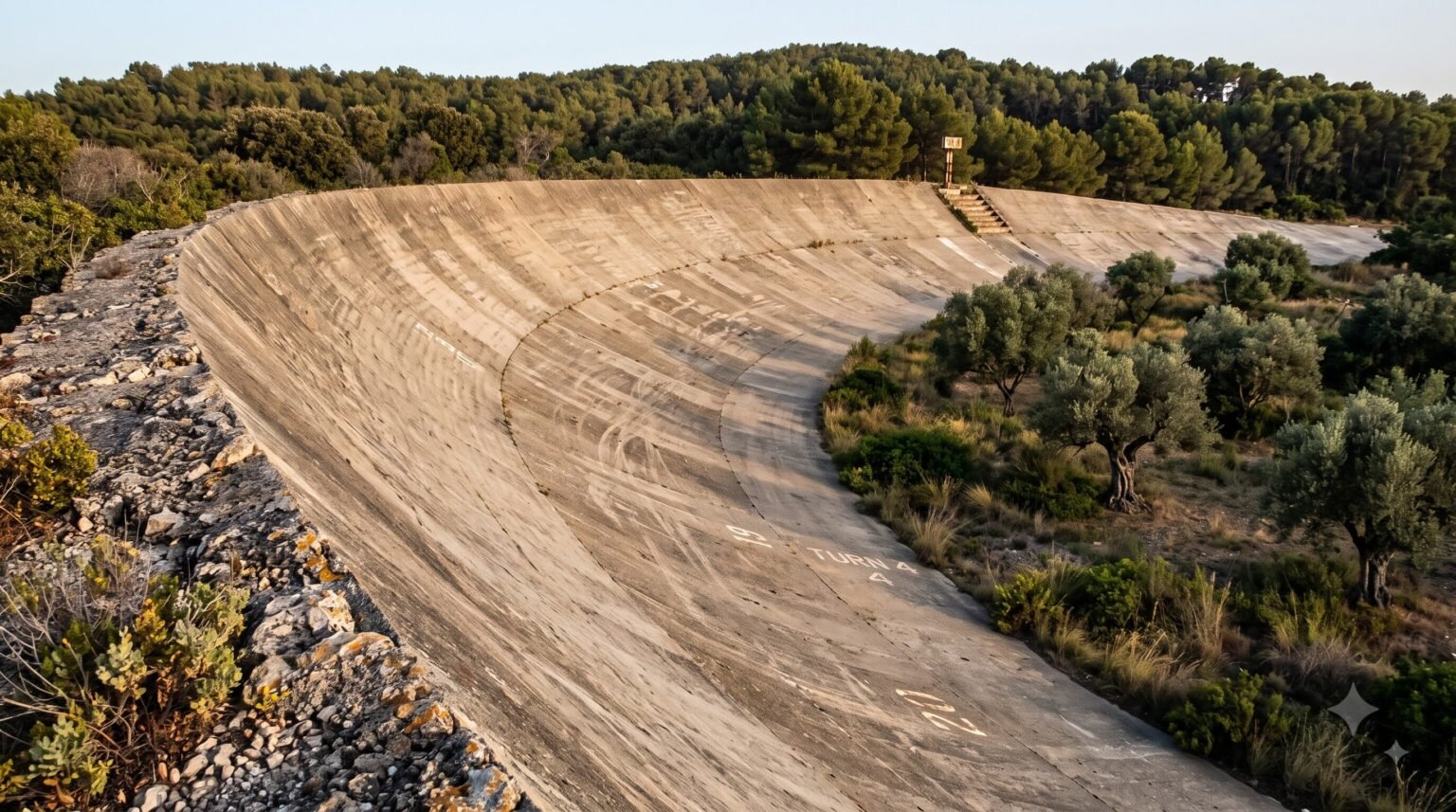
You round a bend on the coastal road, and the hillside stops making sense. Grey concrete curls out of the scrub like a wave caught mid-crash. This is Sitges -Terramar, the oldest oval racetrack on Earth still standing in anything close to its original form.
The closer you walk, the less your eyes want to believe it.
A wall. Not a bend. A wall.
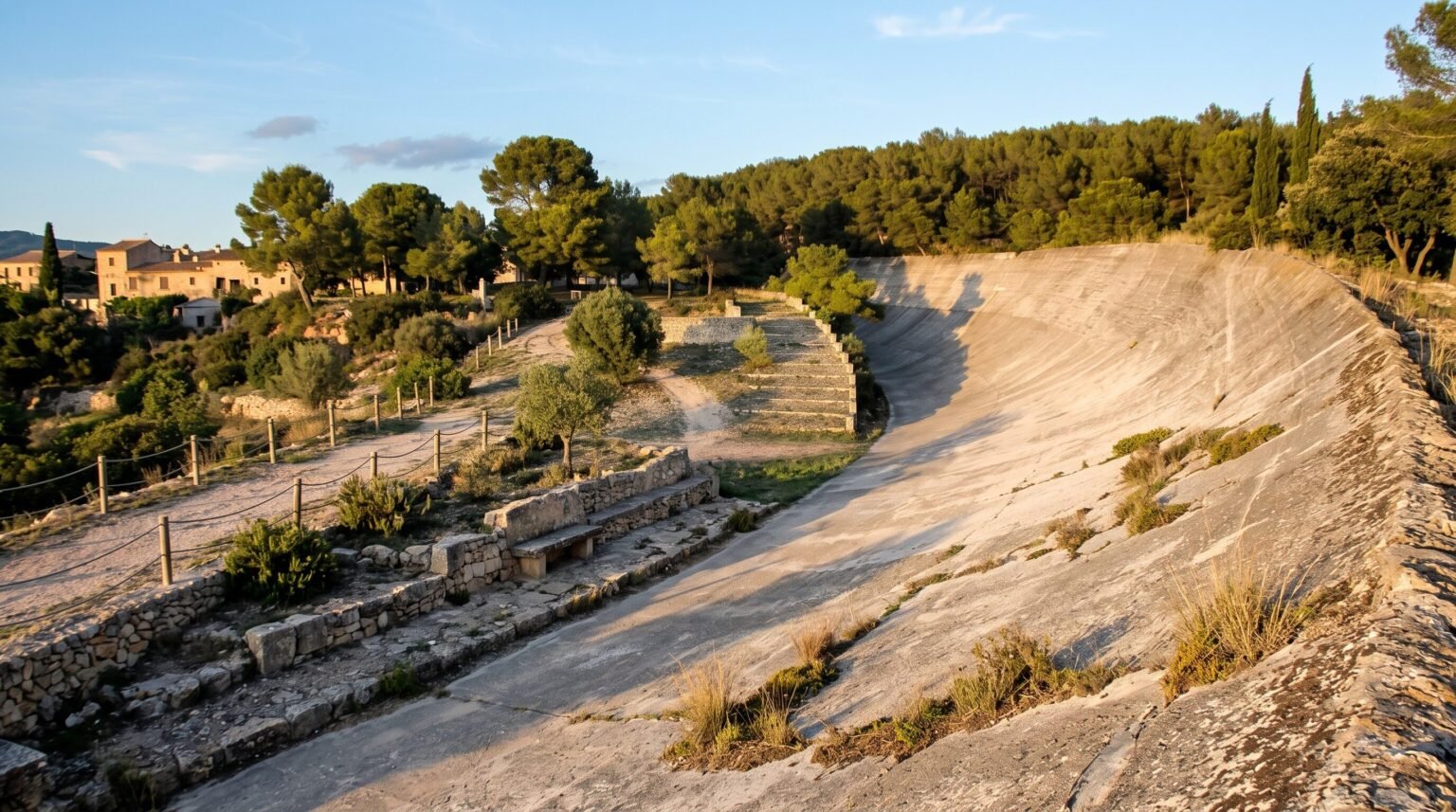
Sixty-six degrees of banked concrete, tipped so far past vertical it feels like a rule got broken here. Talladega, the steepest oval NASCAR ever built, tops out around 33 degrees. Sitges-Terramar simply ignores that ceiling.
Step back to 1923, and this same slope screamed with engine noise, two hundred laps thundering around a 2-kilometer concrete bowl cut into the Catalan hillside. Step forward to today, and sheep graze where the cars once ran, a chicken farm occupying part of the infield.
Nobody planned that particular joke. History just landed there.
Sixty-Six Degrees From Reason at Sitges-Terramar
Walk up to the base of the banking and crane your neck. Keep craning and the top of the curve leans out over your head before it has even finished climbing.
Some measurements call it sixty degrees. Others say sixty-six. A few old-timers standing right where you’re standing swear the very lip pushes past ninety. Whatever the true number, your body reads it the same way; as a wall, not a corner.
At roughly 200 kilometers an hour, this banking is steep enough that a driver could theoretically release the wheel mid-curve and let the concrete do the steering. Nobody with common sense kept trying that for very long, but the math holds up and that fact sits heavy in your stomach as you tilt your head back.
The Concrete That Refused to Die
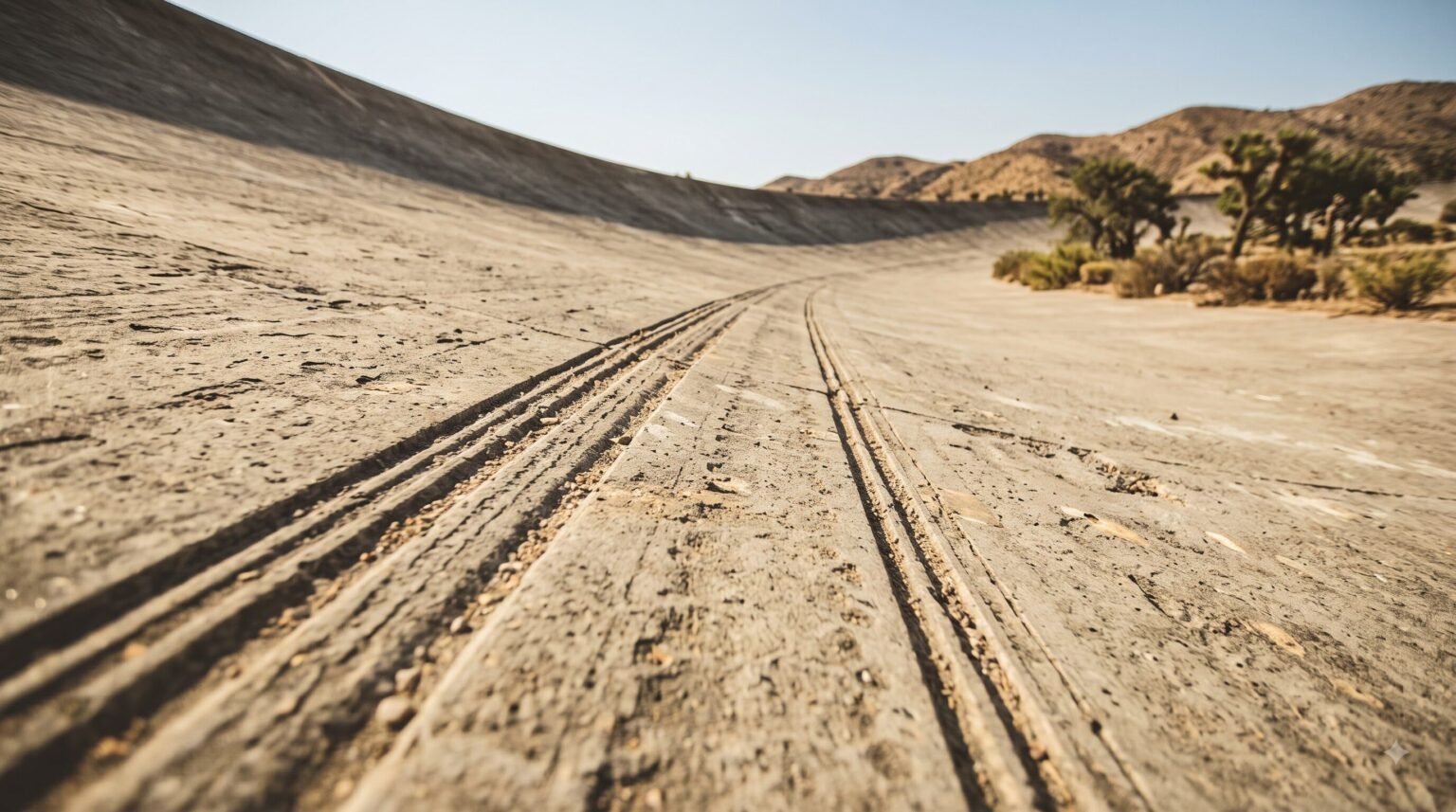
Run your hand along the surface now. Thirty centimeters of concrete, poured in 1923, warm under your palm, sunbaked after a century of Mediterranean afternoons.
Never resurfaced. Never significantly altered since. You are touching the same skin those Grand Prix cars touched a hundred years ago. Only three ovals on the planet came before this one, built in this exact spirit –
- Brooklands in England, 1907.
- Indianapolis, 1909.
- Monza, 1921.
Then Sitges-Terramar; fourth in line, and the only one of the four left this close to untouched.
Historians still call it the Spanish Brooklands, after its British cousin. This place wore the century far better than Brooklands ever did.
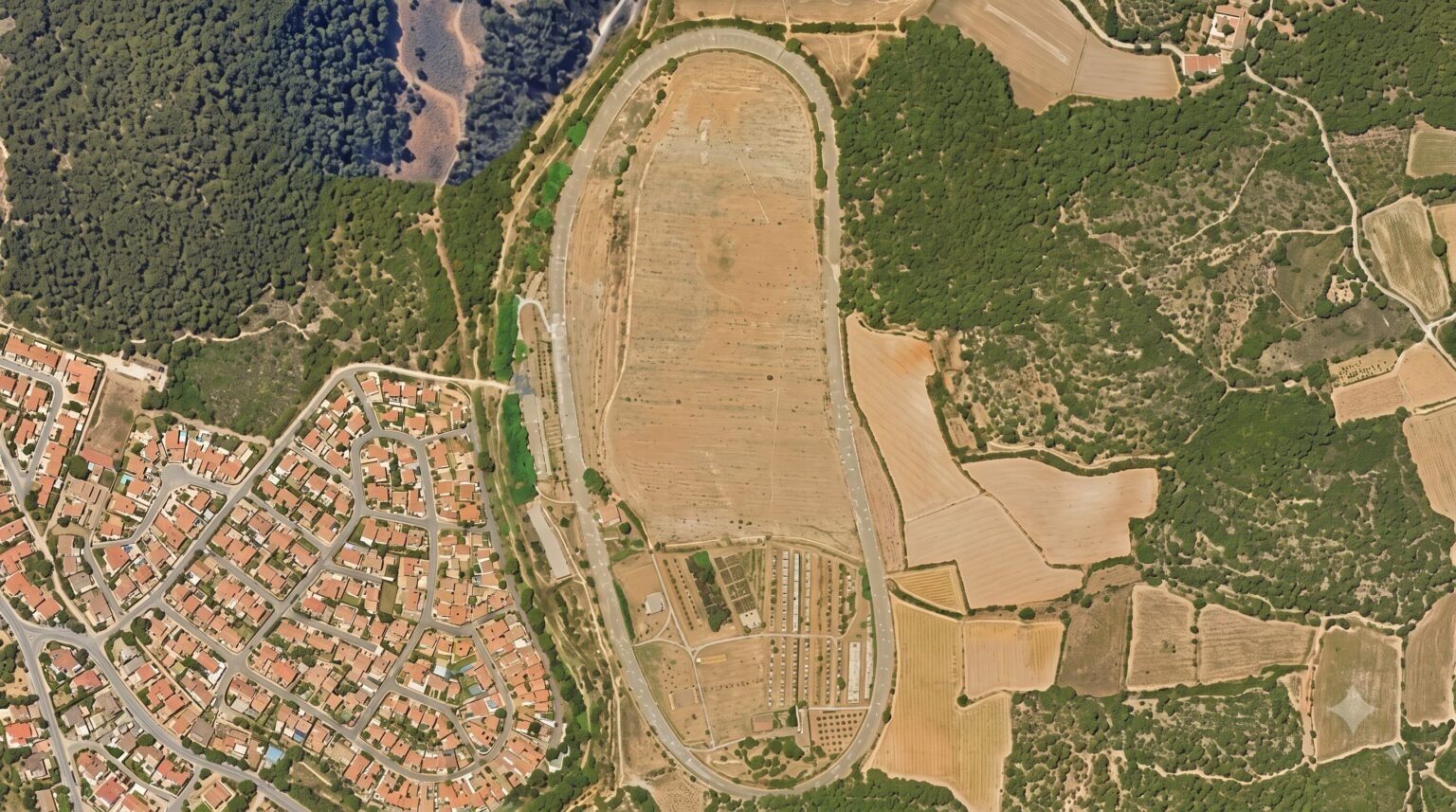
QUICK FACTS: AUTÒDROM DE SITGES-TERRAMAR
| Name | Autòdrom de Sitges-Terramar |
| Location | Sant Pere de Ribes, Catalonia, Spain |
| Opened | October 28, 1923 |
| Track length | Approximately 2 km |
| Construction period | About 300 days |
| Construction cost | Around 4 million pesetas |
| Track designer | Jaume Mestres i Fossas |
| Grandstand architect | Josep Maria Martino |
| Circuit type | Concrete oval |
| Last racing period | Races continued intermittently until May 1955 |
| Current visitor option | Pre-arranged guided group visits |
Sheep, Chickens, and the Ghost of Speed
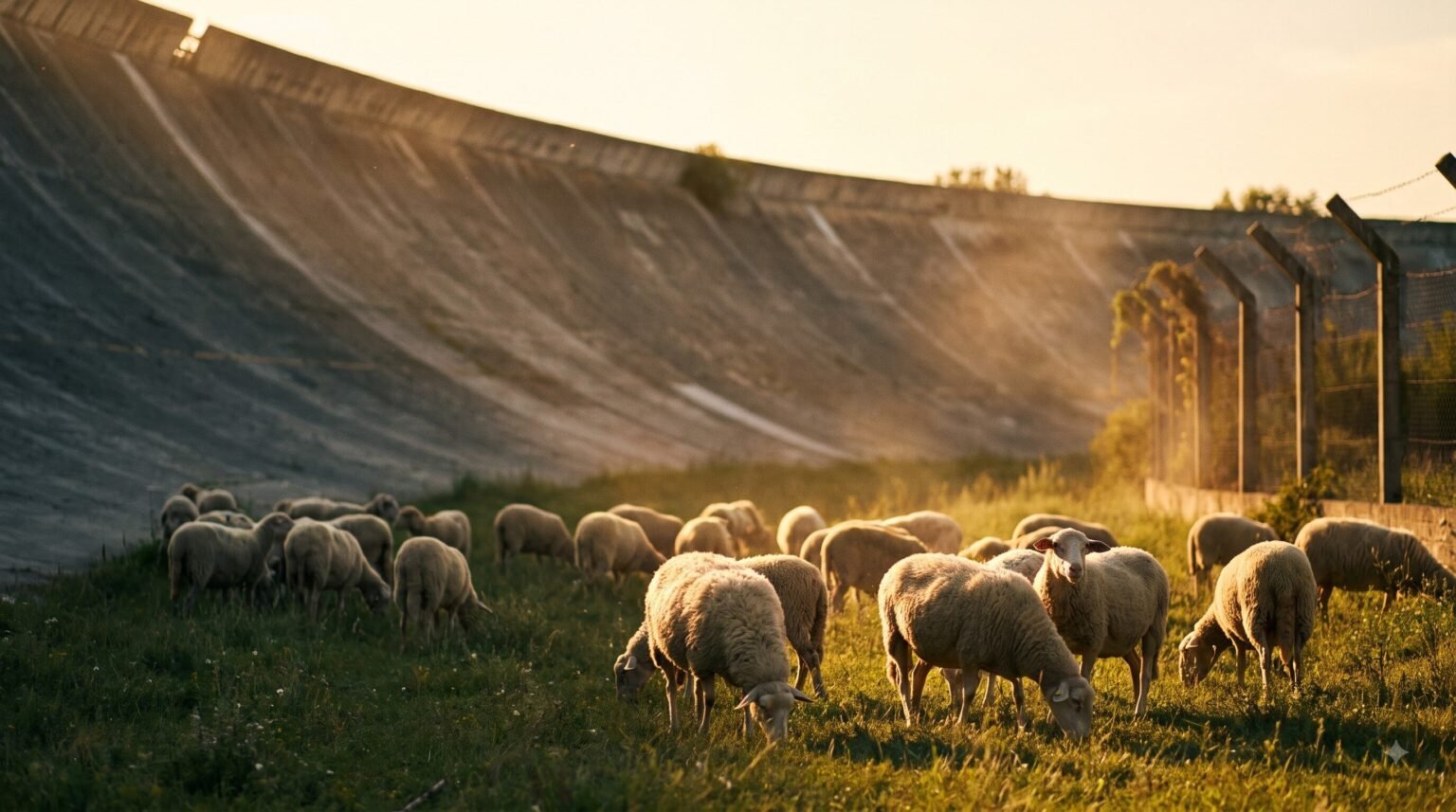
Look down into the bowl, and wool-coated shapes drift across grass that used to be a raceway infield. A chicken farm shares the same ground.
The contrast is almost too obvious to write down; one of the most radical pieces of racing architecture in Europe, quietly handed over to livestock.
Modern supercars still return here sometimes, engines echoing off the banking for a photo shoot, or a film crew chasing that same impossible curve. For an afternoon, the wall remembers what it was built for. Then the animals come back, and the silence returns with them.
The C-32 motorway to Barcelona runs close enough now that you can hear traffic from the top of the banking, and Sitges itself has grown right up to the fence line. That this place survived at all, squeezed between a highway and an expanding town, feels like its own small miracle.
Born From a Garden-City Dream
Rewind a hundred years. Past the sheep. Past the silence. Back to a hillside that was still just a hillside.
In 1922, a businessman named Francesc Armengol looked at this stretch of land near Sitges and saw something bigger than a racetrack. Alongside local racing hero Fredrick Armangué, He imagined a whole “Ciudad-Jardín,” a garden city called Terramar, with leisure and residential life built around it. The track was meant to be its beating heart, not a standalone attraction.
Armengol founded a company, Autódromo Nacional S.A., to make it real. Ground broke in January 1923.
Three Hundred Days of Concrete
What followed reads like a construction fairy tale; roughly 300 days, start to finish, to turn bare hillside into a race-ready oval.
3.5 million kilograms of concrete went into it. Picture that for a second; three and a half thousand tons of material, shaped into curves this extreme, on a schedule that would make a modern contractor sweat.
The total bill came to 4 million Pesetas. Converted loosely into today’s money, that number sounds almost cheap.
But pesetas from 1923 don’t translate cleanly into current spending power. The real cost was measured as much in ambition as in cash.
The Architect Who Built for a King
Two names sit behind the design, splitting the job cleanly in half. Catalan architect Jaume Mestres I Fossas designed the track itself. Officially, the Autódromo de Sitges-Terramar; the banking, the geometry, the whole improbable shape of the thing.
He would later be remembered as something close to Spain’s original architect of sports facilities. Josep Maria Martino Arroyo handled the grandstands and pit buildings instead, giving the human side of the venue its own reinforced-concrete presence.
The Royal Box
Somewhere in those plans sat a Royal Box, built specifically for a king. When the track opened on 28 October 1923 with the first-ever Spanish Grand Prix, King Alfonso XIII didn’t attend in person but his son, the Infante Alfonso de Borbón, stood in for him instead. The gesture still carried royal weight.
This was Spain’s first purpose-built racetrack, only the third of its kind in all of Europe, after Brooklands and Monza.
Every ambition packed into that opening day matched the ambition behind Brooklands, behind Monza, behind Indianapolis; put your country on the map of world motorsport and do it in concrete instead of words.
The site sat in the municipality of Sant Pere de Ribes, tucked beside Sitges, about 40 kilometers south of Barcelona, inside the Rocamar pocket of the wider Terramar development.
Reinforced concrete on this scale, for a sports building, had barely been attempted anywhere in Spain before. Everything here was a first.
Anatomy of an Impossible Curve
Stand at trackside and try to read the whole shape of the circuit at once. You can’t. It was built to be experienced in motion, not studied from one spot.
The full oval measures 2 kilometers, a touch over 1.2 miles, made from two very different corners joined by straights. One end curls into a perfect half-circle, a hundred-meter radius that looks almost gentle from a distance.
The other end bends into a parabolic curve instead tighter in places, looser in others, refusing to match its twin. The track runs somewhere between 18 and 22 meters wide, narrowing and widening as it goes.
That asymmetry isn’t a flaw. It’s the entire point; drivers had to relearn the track’s rhythm every single lap, because the two ends demanded completely different things from a car.
Two Corners, Two Construction Methods
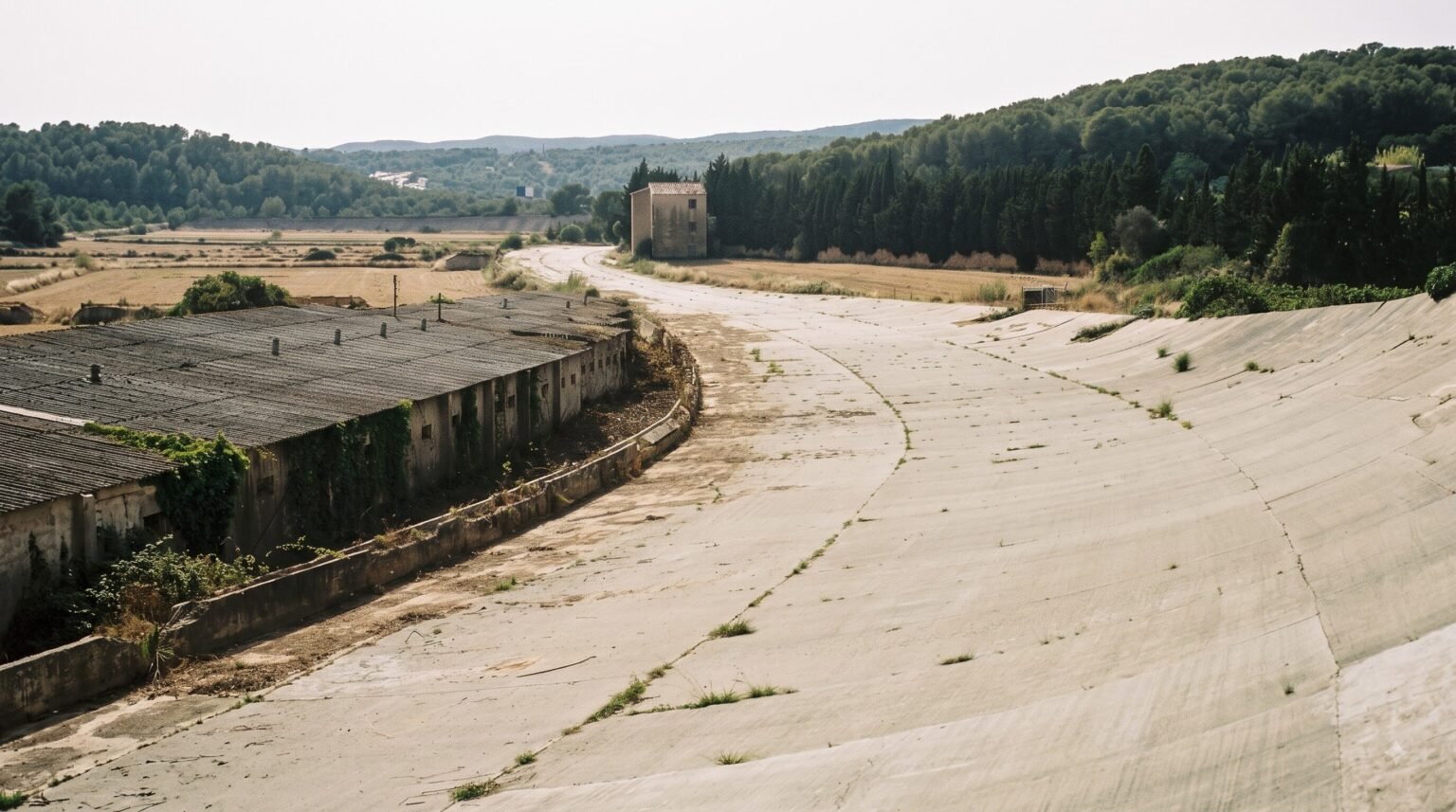
One banked corner rises entirely above the natural ground, a freestanding half-circle of concrete holding itself up against nothing but its own engineering.
The other corner is partly buried into the hillside instead, gouged straight out of rock-carved like a channel, not built like a wall.
Two banked turns. Two completely different construction methods. The same 2-kilometer loop.
The Day the Track Came Alive
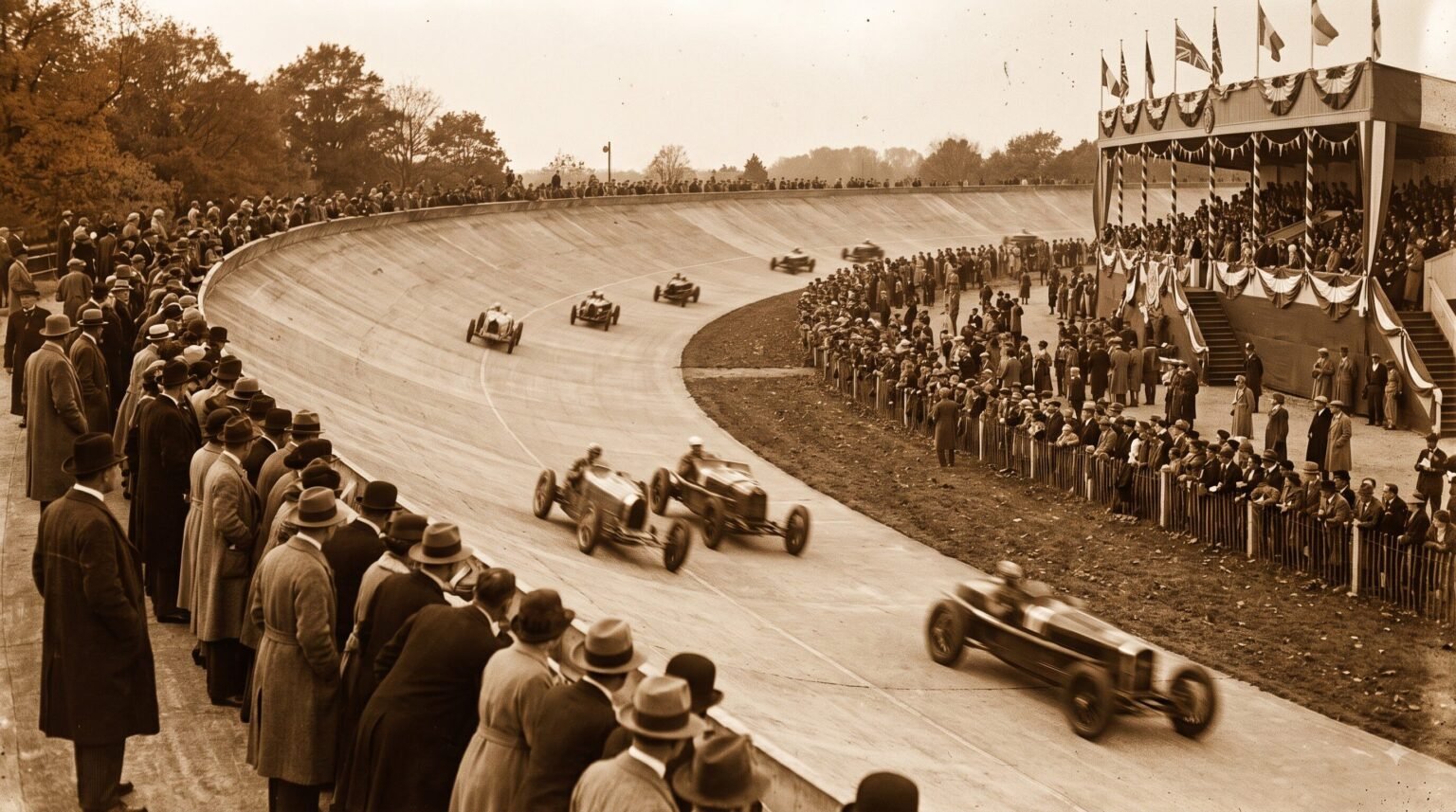
Picture the morning of 28 October 1923; seven Grand Prix cars, each running a 2-litre engine, lined up for two hundred laps around this bowl. Five of them made it to the finish.
Albert Divo and the 1923 Race
French driver Albert Divo, at the wheel of a Sunbeam, crossed the line first, covering the full 400 kilometers in two hours, forty-eight minutes, and five seconds.
That works out to an average speed of nearly 143 kilometers an hour; a staggering pace on a track that had barely been finished that same year.
British driver Louis Zborowski, in a Miller 122, came home second, just fifty seconds behind. It was a heartbreakingly tight margin; Zborowski had been leading the pack until a desperate late pit stop to change a wheel, just seven laps from the checkered flag, handed Divo the win.
Zborowski’s name turns up again in the record books here, for a different reason; the fastest single lap ever officially recorded at Sitges-Terramar, 45.8 seconds.
The Sound Before the Silence
Listen closely enough, standing where the grandstand used to be, and you can almost rebuild the sound; engines echoing off concrete built to throw noise straight back at the crowd, two hundred laps of it.
Then, within two years, silence. Fast-changing car technology and money troubles quietly ended what royal patronage had started.
That silence is the sound you’re standing in right now.
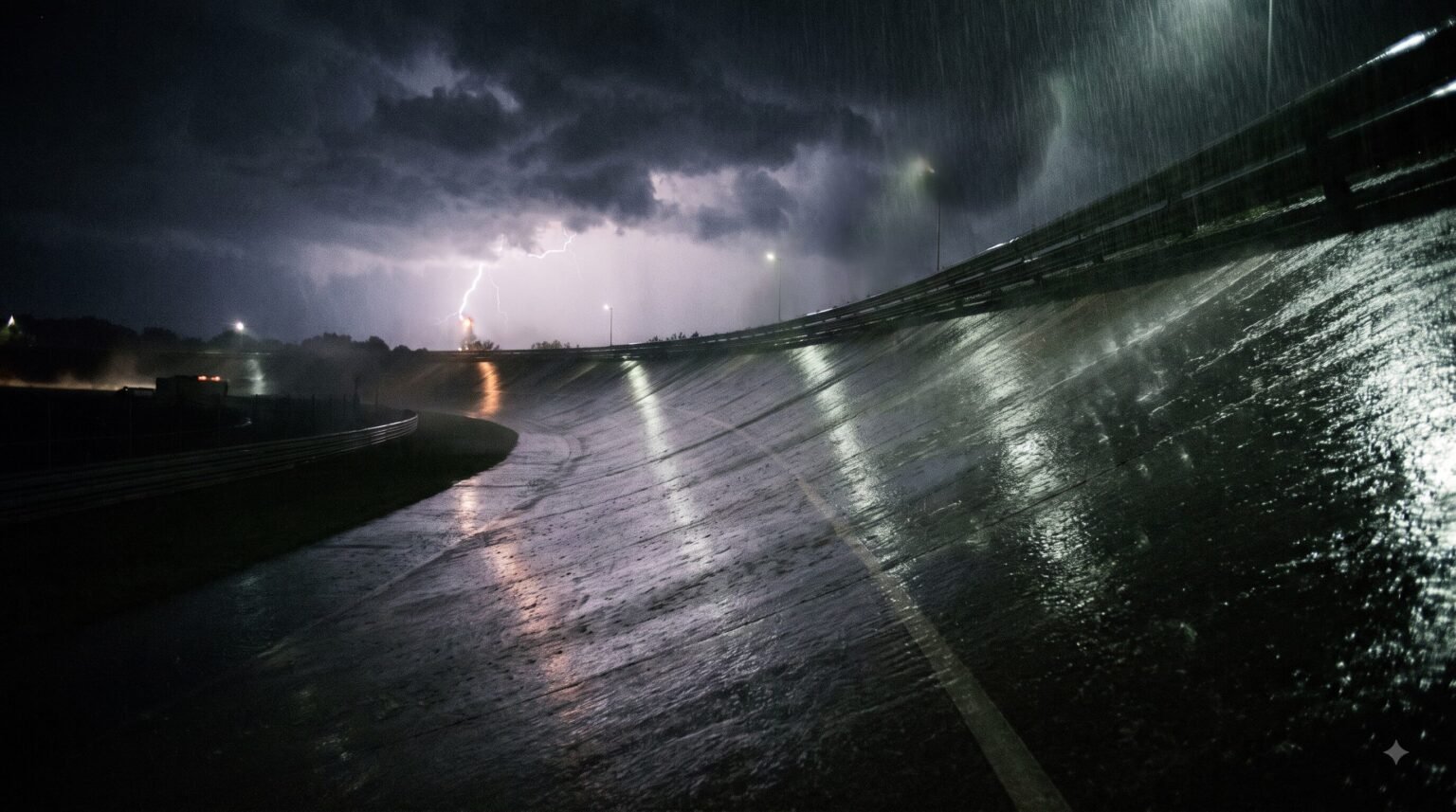
Rain fell the night before any of this went quiet. Not a drizzle; a downpour heavy enough that organizers nearly called the whole thing off before a single car turned a wheel.
The inaugural racing week survived, barely. While the main Spanish Grand Prix held its line, it was the closing 1500cc Voiturette race that took the real hit and slashed from three hundred laps to two hundred overnight as the track struggled against the downpour and mechanical strain. Nobody in the stands could have known it, but the storm was a warning and the circuit didn’t listen.
Nobody in the stands could have known it, but the storm was a warning and the circuit didn’t listen.
The Rain That Wrote the Ending
Money broke it before the cars did. A dispute over prize money followed that first race, ugly enough that international racing authorities stepped in and banned Sitges-Terramar from hosting international events again.
Just like that, the Grand Prix ambition was over, two years after opening, two years after a king’s son had stood in the Royal Box.
The technology moved on without it too. Grand Prix racing wanted longer circuits by the mid-1920s; more corners, more variety, more room for a driver’s skill to matter over raw banking angle.
A 2-kilometre oval, no matter how extreme its walls, started to look primitive compared to what road courses elsewhere in Europe were becoming.
Local meets kept happening here and there; regional events, smaller fields, smaller crowds, but none of it ever brought back what the circuit lost that first October.
Abandoned, Never Demolished
The last official race ran on 29 May 1955. After that, nothing; no formal announcement, no grand farewell, the gates simply stopped opening for competitive racing.
Revenue had been sliding for years by then, spectator numbers thinning out. Maintaining a concrete surface these large costs real money, and newer circuits kept pulling both drivers and crowds elsewhere.
Here is where Sitges-Terramar splits from its British cousin in the most important way. Brooklands got torn apart after the Second World War, its banking broken up for scrap and salvage.
Sitges-Terramar just sat there instead. Nobody demolished it. Nobody had a reason to.
The Bones Never Broke
Weeds crept into the cracks. Roofs on the grandstand gave way, windows shattered one by one, ivy climbed through empty door frames.
But the concrete itself, that thirty-centimeters skin, held its shape through all of it; the bones never broke, even while everything built on top of them fell apart.
When the Farm Took Over
Somewhere in that slow decay, sheep started grazing the infield, and a farmer moved chickens in. It reads like an insult to a Grand Prix circuit. It was closer to an accident of preservation.
Farmland doesn’t get bulldozed for parking lots the way abandoned lots do, and the animals, without meaning to, helped keep developers away.
Sitges itself kept growing around this same period, turning into exactly the kind of coastal tourist town that swallows empty land for new hotels. But a piece of motorsport history sitting quietly on a hillside reads differently to a town council than a vacant field does.
Landmark status followed, protecting the site from demolition or careless redevelopment.
Ownership passed through different hands over the decades before it eventually landed with the Ricart family, led by Marcel Ricart I Lloret. They became the latest custodians of a track nobody had figured out what to do with.
Through every decade of silence, the circuit never quite vanished from memory. Historians kept writing about it. Photographers kept finding their way here.
Then, slowly, people started coming back too.
Concrete, Wind, and Wandering Sheep
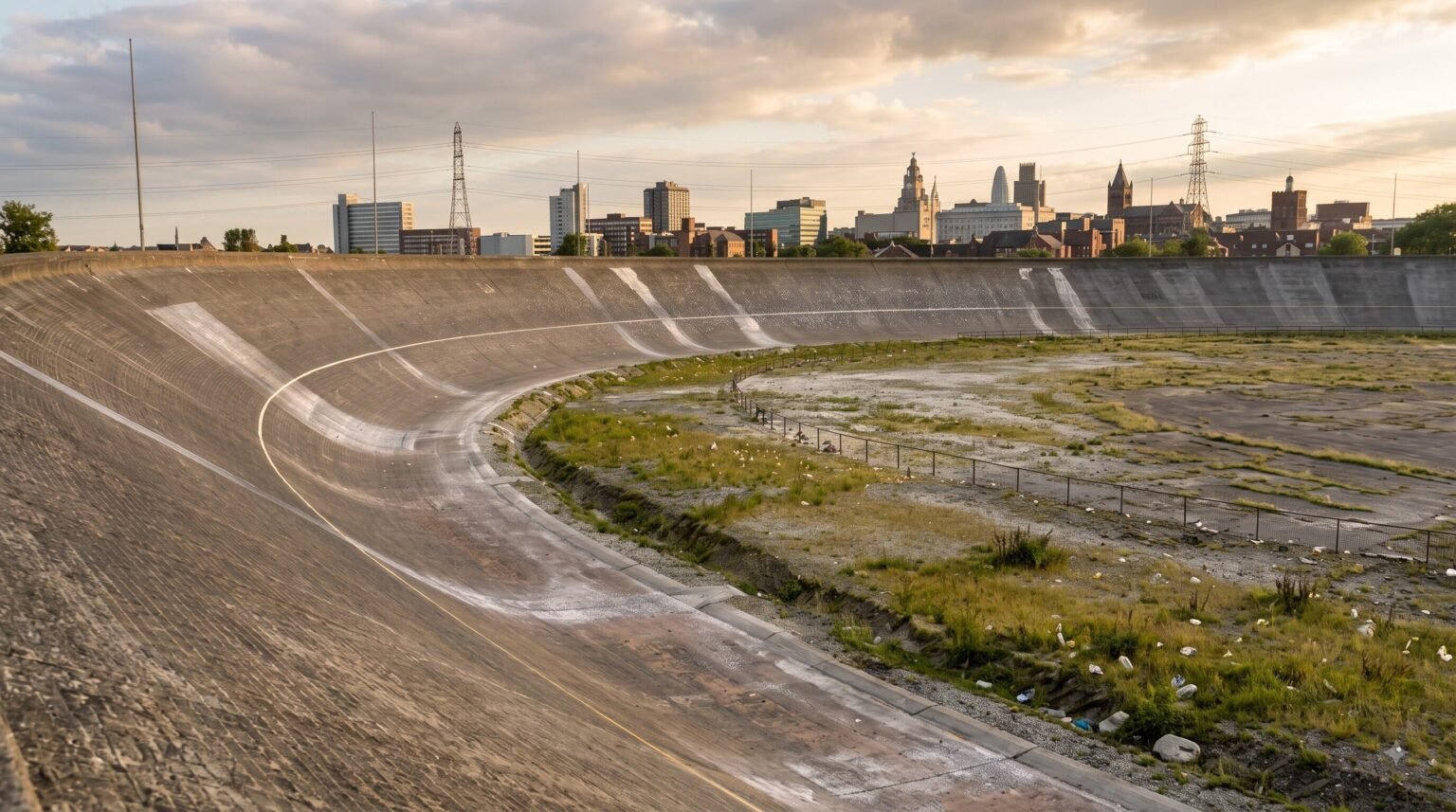
Walk onto the site today, if you can get permission, and the first thing that hits you is scale, not decay. The banking still rises to the same impossible height it always did; a hundred years hasn’t touched that.
Look closer, and the surface tells its age. Cracks run through the concrete like dry riverbeds, and discoloration streaks down where a century of rain has run its course.
Vegetation pushes up through seams that were never meant to hold anything but tyres. The grandstand behind you looks worse, sections of roof are simply gone, rust eating into whatever metal fixtures remain exposed.
The Sensory Echoes of the Track
Stand still for a second and listen. Wind moves across the open bowl in a way that has nowhere to hide, curling around the banking with a low, constant hush.
Somewhere in the distance, traffic hums along the motorway. Closer in, a different kind of sound; sheep, and the occasional indignant squawk from the chicken farm.
Stand inside the bowl itself and every one of those sounds bounces back at you, amplified by the same concrete curve built to throw engine noise at a grandstand full of people.
Breathe in, and it’s dust first -dry, mineral, sunbaked concrete dust, the kind that gets into your shoes and stays there. Under that, the green smell of scrub and untended grass, and occasionally, unmistakably, the farm.
Touch the banking again, the way you did up at the top of the curve. It’s rougher now than it would have been in 1923, worn by weather rather than tyres.
Some sections feel solid enough to trust completely. Others crumble slightly under your palm, decades of neglect showing through.
The Modern Ghost of Sitges-Terramar
None of this stopped a Spyker C8 Aileron from returning to run these banks, and Red Bull has filmed here too, chasing that same gravity-defying curve for a promotional shoot.
For those few hours, the wall works exactly as designed. Then the crew packs up, and the sheep reclaims the infield.
How to Visit Sitges-Terramar Today
Here’s the gritty truth; you cannot simply drive up and walk onto this track. Sitges-Terramar sits on private land, and the current owners have no interest in casual foot traffic wandering across crumbling concrete they’d be liable for.
Booking and Guided Access
Guided tours are how most visitors get in, and they run through Sitges’ own tourist information office rather than the site directly.
Tours have historically departed from the roundabout by Garrofer Camping, out on the C-246A at kilometer 39, with an 11:00 start time the norm.
Pricing has sat around 12 Euros a person, with children under 12 getting in free; though treat both the price and the schedule as a starting point, not gospel.
Call ahead. The Sitges Tourist Information Office, at Plaça Eduard Maristany 2, handles bookings. Their website, sitgestur.cat, is worth a look before you make the trip.
Getting to the general area is the easy part. The C-32 motorway runs you south from Barcelona in about forty minutes, and the site itself sits maybe ten to fifteen minutes further, inland from central Sitges.
You’ll actually see the banking from the road before you ever get close, and that first glimpse, from a moving car, is almost as striking as standing at the base of it.
Getting closer than that means going through the front door; the tour, the booking, the permission slip nobody hands you but everybody expects.
What to Bring
Pack like it. Solid shoes with real grip matter more here than almost anywhere else on a European itinerary; aged concrete on a steep incline punishes flimsy soles.
Bring sun protection, all of it; hat, sunscreen, water. There’s no shade, out on that hillside, and precious little shelter from a Mediterranean afternoon.
A camera earns its weight here, obviously, and so do binoculars, if you want to make out the far banking without walking the whole loop.
Dress for a farm as much as for a racetrack; dust, livestock, uneven ground. This is agricultural land wearing a motorsport skeleton underneath.
Don’t expect toilets. Don’t expect water fountains. Don’t expect shade beyond what you bring yourself.
Safety on the Banking
Every hazard here is real, not decorative; crumbling grandstand sections, steep drops on the banking, uneven concrete that has spent a century settling. Move carefully, and watch where the animals have been.
Standing at the top of that banking today, camera in hand, you’re not alone in coming here. Historians make this pilgrimage. So do classic car obsessives. Photographers come too, chasing exactly the kind of decayed grandeur most tracks never offer.

The Future of Sitges-Terramar
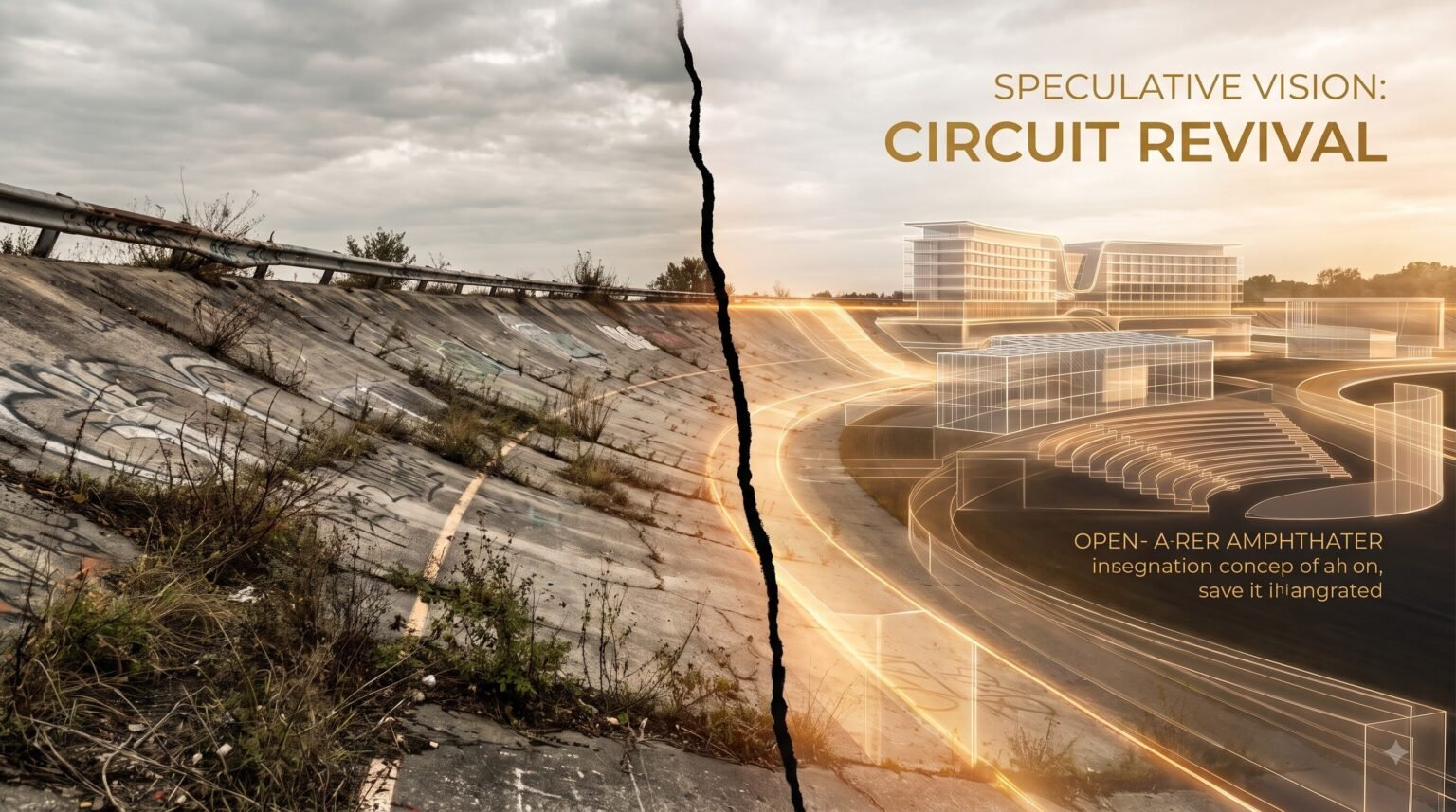
The current owner has bigger plans than tours and sheep, as it happens. Marcel Ricart has floated a project called L’autodrom Resort; a major redevelopment project aims to transform the site not into a car circuit, but into a world-class international equestrian sports facility.
The vision centers on horse jumping events, high-end tourism, and eco-friendly integration, with the historic concrete track preserved as a striking backdrop rather than an active racecourse.
The track itself, rehabilitated for exhibition racing. The grandstand, rebuilt into a classic car museum. An amphitheatre, a hotel, convention centre, and commercial spaces like shops and restaurants, even a business incubator aimed at the future of mobility. All are pitched around the bones of a hundred-year-old concrete bowl.
None of it exists yet. Every piece depends on investment and approval that hasn’t fully landed.
So for now, this is what you get; a wall of concrete steeper than physics seems to allow, sheep grazing where kings once watched Grand Prix cars scream past, and a silence that has now lasted more than seventy years.
Sitges-Terramar survived because nobody bothered to tear it down. Whatever happens from here, it’s still standing exactly where they poured it, waiting.
The Final Verdict on Sitges-Terramar
You came for a racetrack. You’re leaving with something closer to a ruin that refuses the word “ruin.”
Sitges-Terramar shouldn’t exist in the state it’s in. Tracks this old get demolished, paved over, forgotten entirely. This one just sat still long enough for sheep to save it by accident.
What Sitges-Terramar Left Behind
That’s the tragedy and the miracle in the same breath; a circuit built for kings and Grand Prix glory, undone in two years by rain, money, and physics moving faster than concrete could keep up; then left standing anyway, out of sheer administrative indifference, for seventy years and counting.
Call it awe-inspiring. Call it a cautionary tale about ambition outrunning its own shelf life. Sitges-Terramar earns both labels without needing to choose.
Somewhere in the plans for L’autodrom Resort sits a version of this place with a hotel, a museum, and an amphitheater full of people again. Somewhere else, the version you just walked through; cracked, grazed, gloriously alone.
Choosing Between Past and Future
Would you rather find it exactly like this; cracked, quiet, sheep grazing where the Royal Box once stood or watch it reborn as someone’s luxury resort? Only one of those futures keeps the silence you just stood in.
If places like this pull at something in you, there’s more waiting.
Bookmark and subscribe to roastedbum.com to get more updates on astonishing historical deep dives.
Disclaimer: The content on Roasted Bum is published strictly for historical, architectural, and educational purposes. We do not condone, encourage, or provide instructions for trespassing, bypassing security, or entering restricted, abandoned, or hazardous properties. Urban exploration carries severe legal consequences and life-threatening physical risks, including structural collapse, toxic exposure, and unexploded ordnance. Do not attempt to visit or enter any restricted locations described on this website. Any actions taken by readers based on this content are entirely at their own personal and legal risk.
