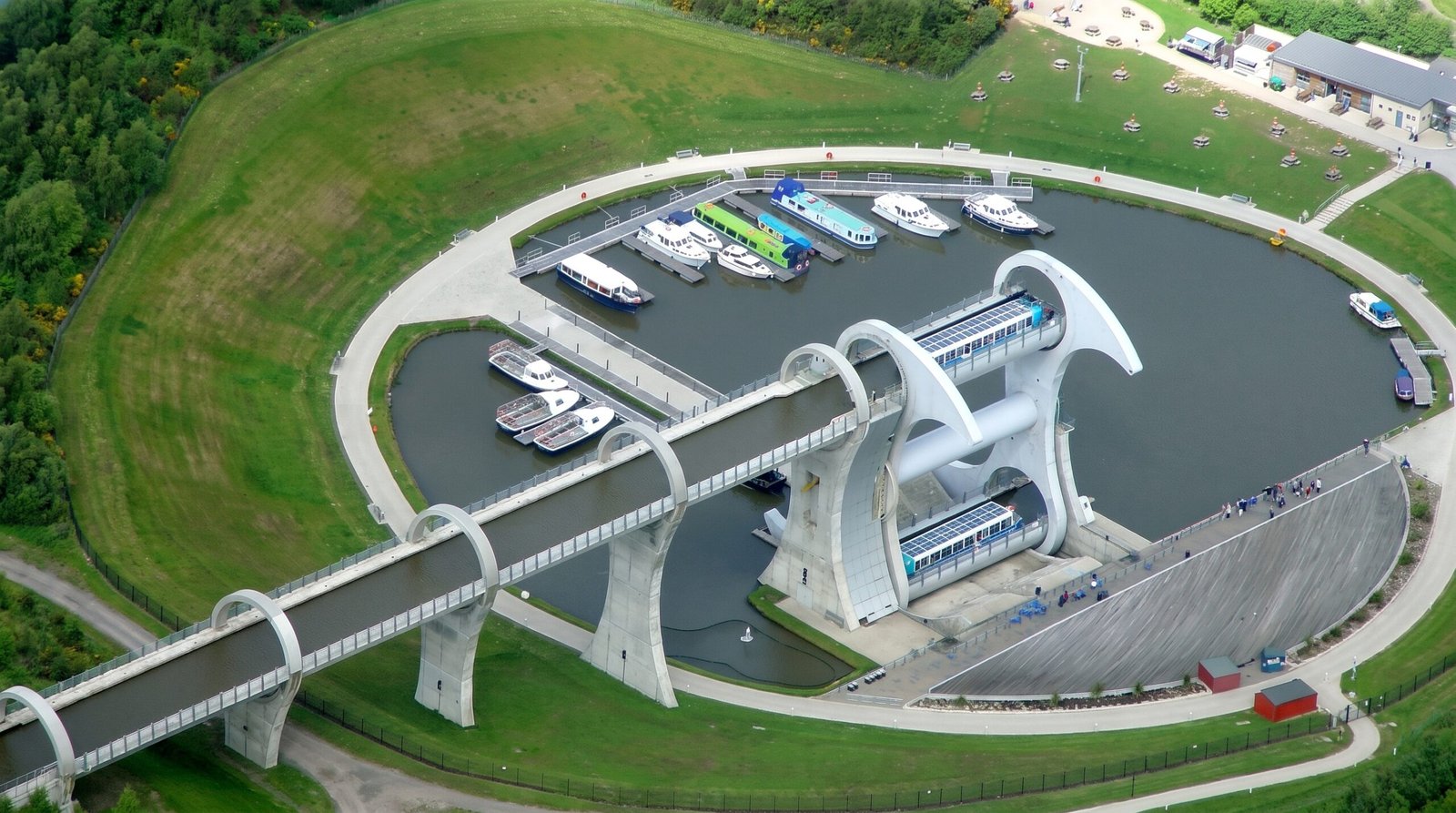
The Machine That Swallows Boats Whole: Inside Scotland's Falkirk Wheel
You hear it before you see it. A low mechanical hum rolling across the Scottish Lowlands, steady as a heartbeat, Then the trees part, and the Falkirk Wheel appears, the world’s only fully rotating boat lift, turning a full boat through the air like it weighs nothing at all.
Your brain refuses it at first. Boats don’t fly. Locks climb in steps, slow and stubborn, the way canal travel has worked for three centuries. But here, a giant steel arm lifts an entire vessel – passengers, water, and all – thirty-five metres into the sky, then rotates it gently into a canal that shouldn’t be reachable at all.
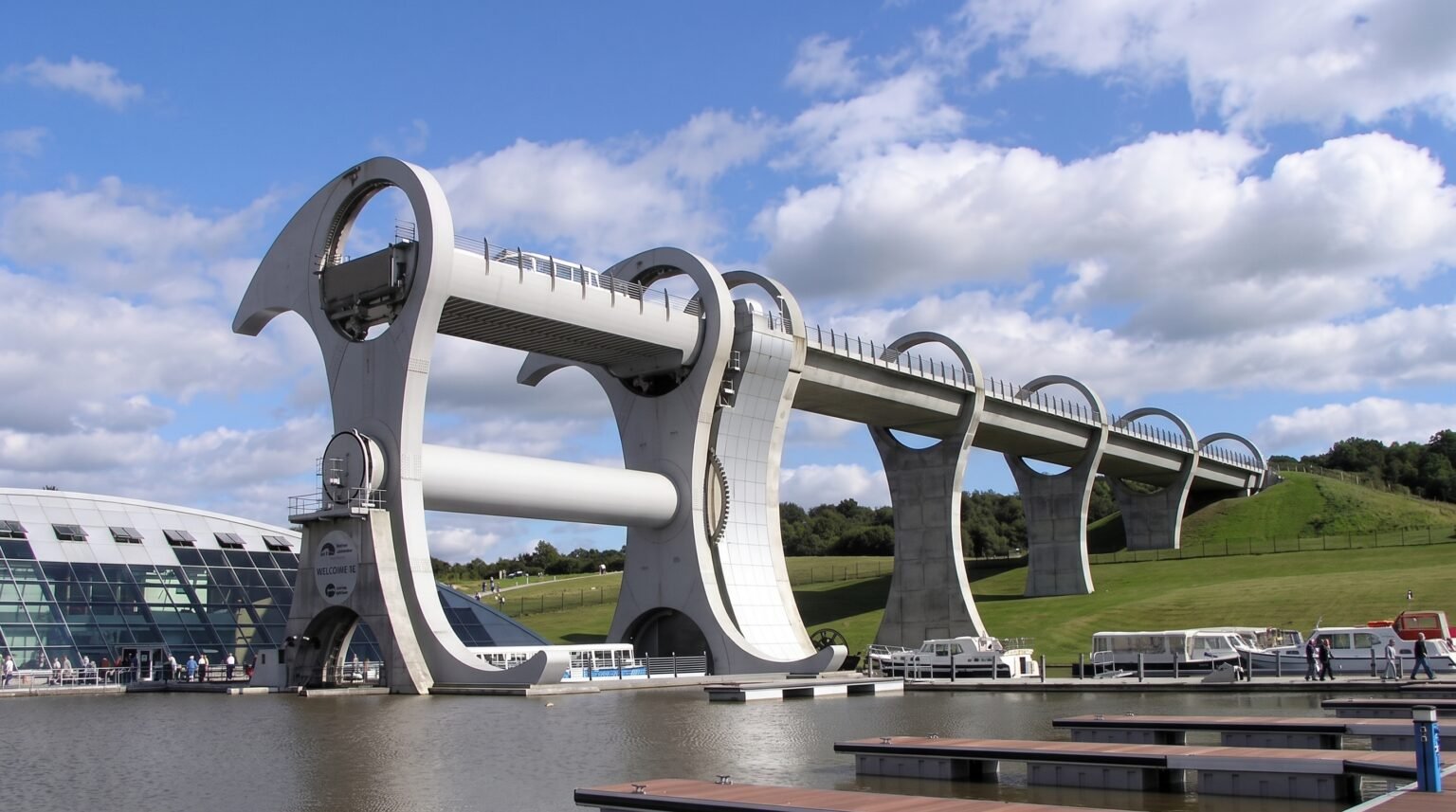
Stand at the base and look up. The scale hits you in the chest before the logic does.
Quick Facts
- Location: Falkirk, Scotland
- Opened: 24 May 2002
- Height: 35 metres
- Purpose: Connects the Forth and Clyde Canal with the Union Canal
- Designed by: RMJM (with concepts from Nicoll Russell Studios)
- Unique feature: World’s only fully rotating boat lift
A Canal Cut in Two, and the Ambition to Heal It
A Link Broken: The Locks That Vanished in 1933
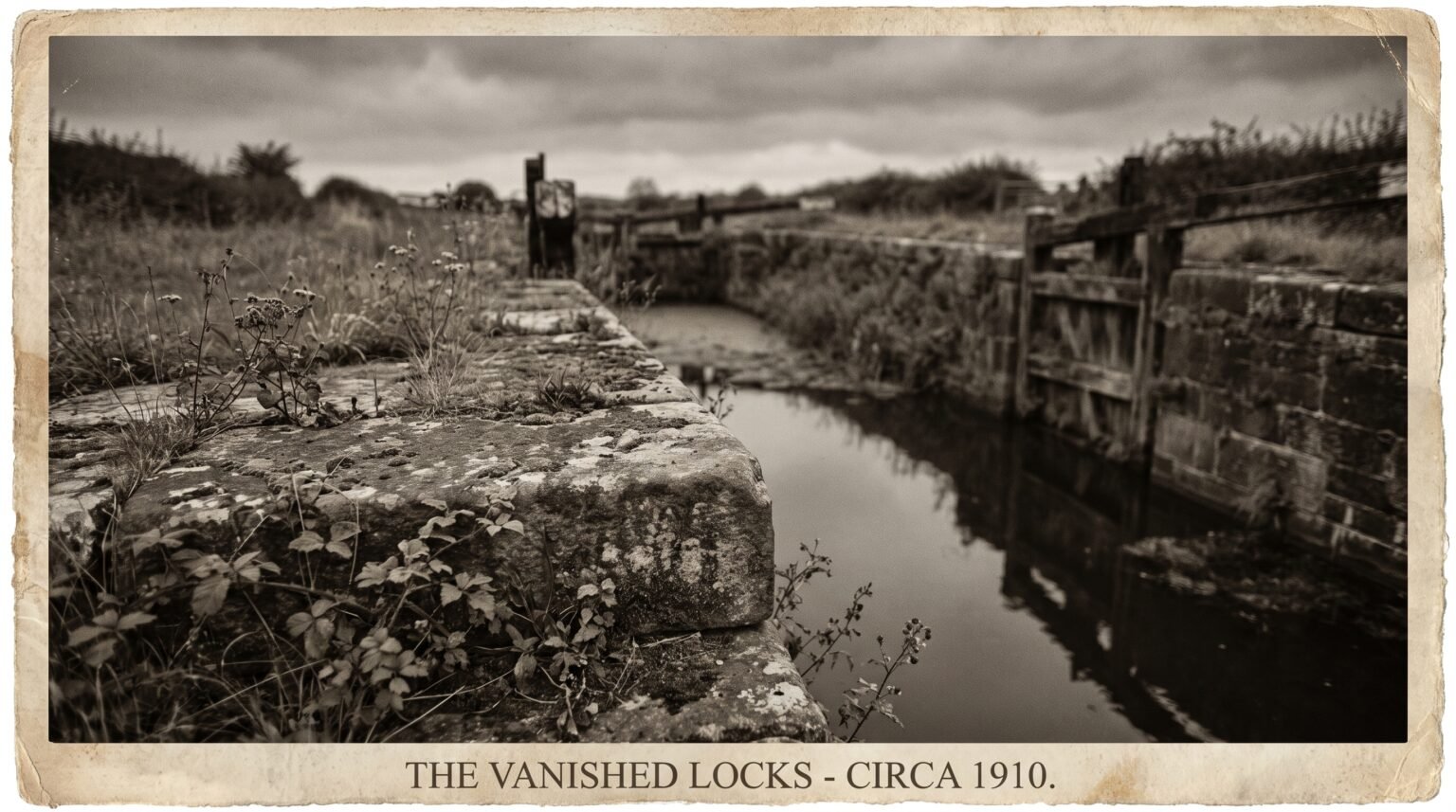
Step back in time to a Scotland stitched together by water. The Forth and Clyde Canal once linked with the Union Canal through a staircase of eleven locks, boats grinding upward one basin at a time. Barges moved coal, cargo, people. The country ran on this slow rhythm of water finding its level.
Then, in 1933, the link broke. The locks fell derelict, got stripped out, and the two canals became strangers separated by a wall of solid earth. For decades, a boat on one waterway had no way of reaching the other. The link simply stopped existing.
The Millennium Link Takes Shape
By the 1990s and early 2000, someone asked the obvious question nobody had answered in sixty years: what if you rebuilt the connection, but better?
The answer became the Millennium Link, a regeneration project with real teeth. Architects at RMJM picked up early concepts from Nicoll Russell Studios, engineers at Binnie Black and Veatch ran the numbers, and a joint venture between Bachy/Soletanche and Morrison Construction won the contract to build it. They brought in Butterley Engineering to design and physically construct the wheel itself.
The Falkirk Wheel: A Jubilee Reunion
This wasn’t built to haul coal anymore. Picture pleasure boats, tourists, and locals reclaiming a waterway that history had quietly erased. Just down the road sit Rough Castle Fort and Tamfourhill, Roman ghosts watching a thoroughly modern machine rise beside them.
On 24 May 2002, during the Queen’s Golden Jubilee, the wheel turned for the first time in public. Two canals, disconnected since 1933, shook hands again.
The Falkirk Wheel: A Celtic Axe Blade in Steel
A Celtic Axe Cast in Steel
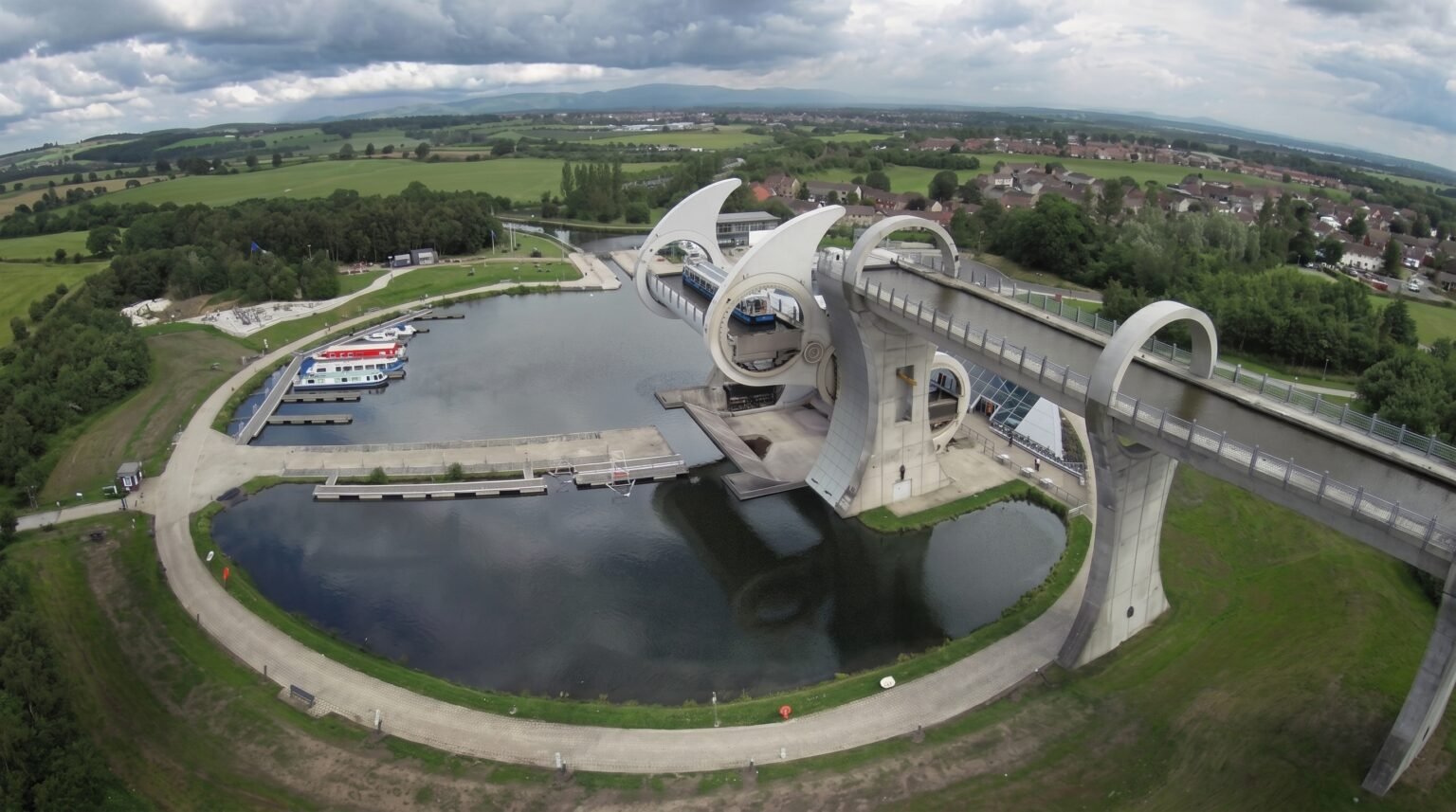
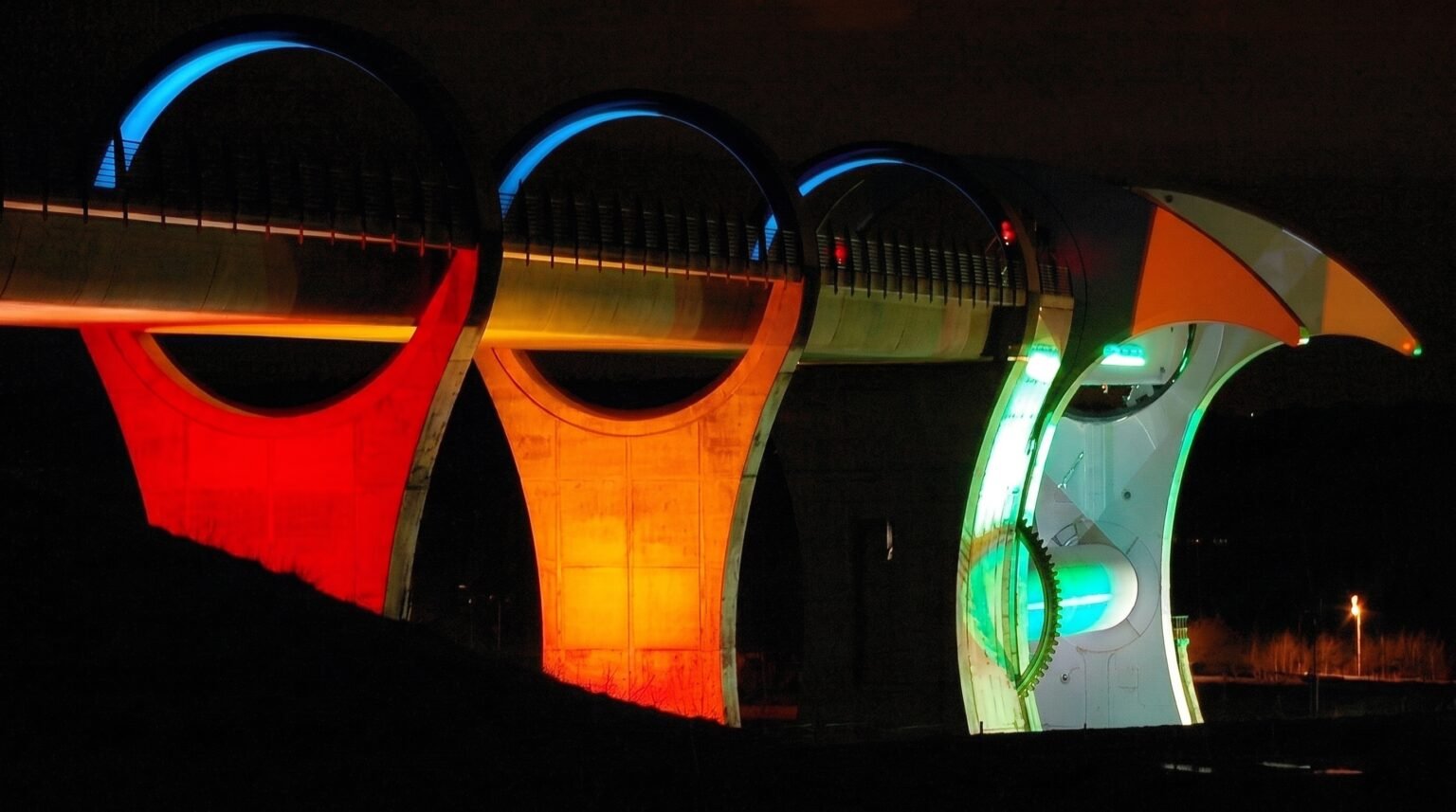
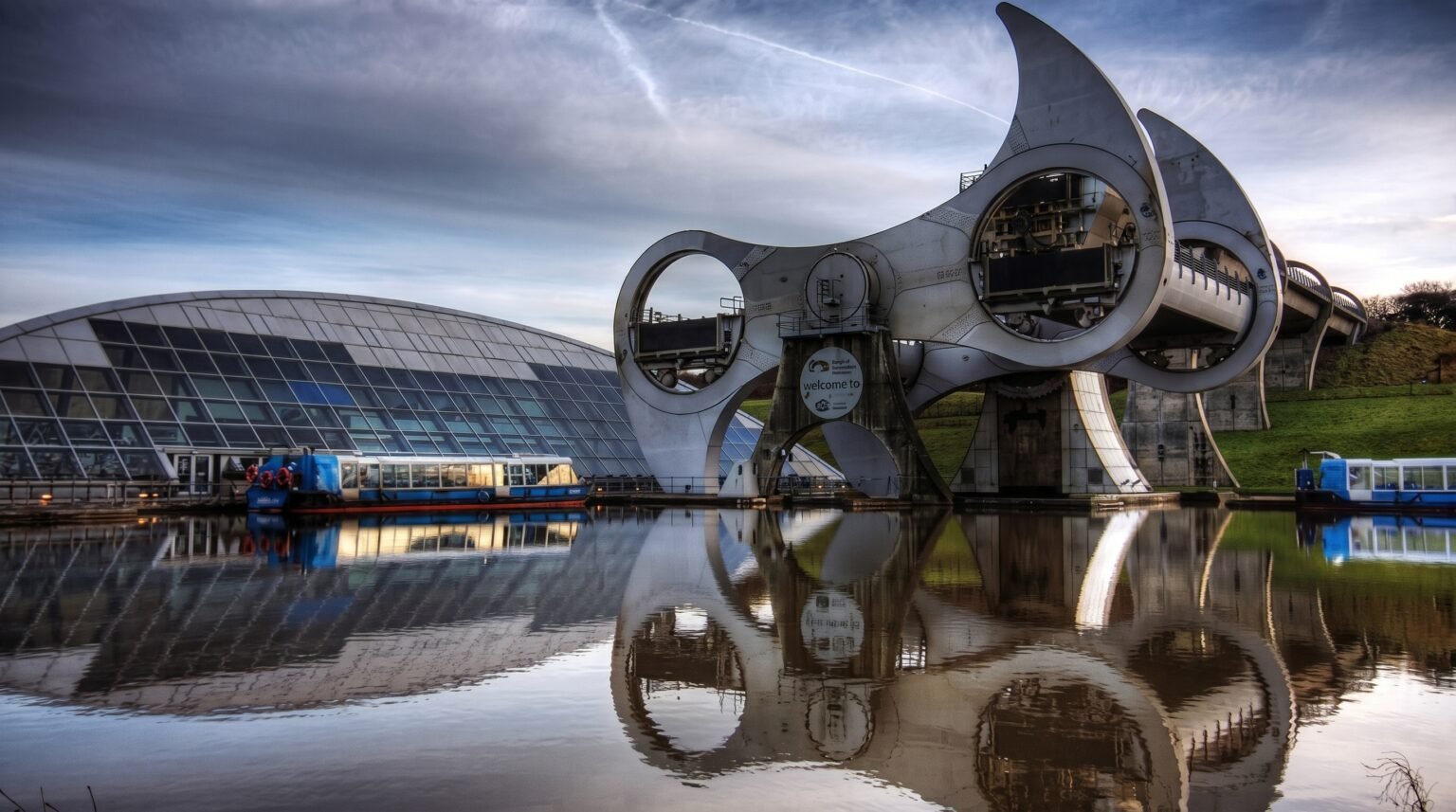
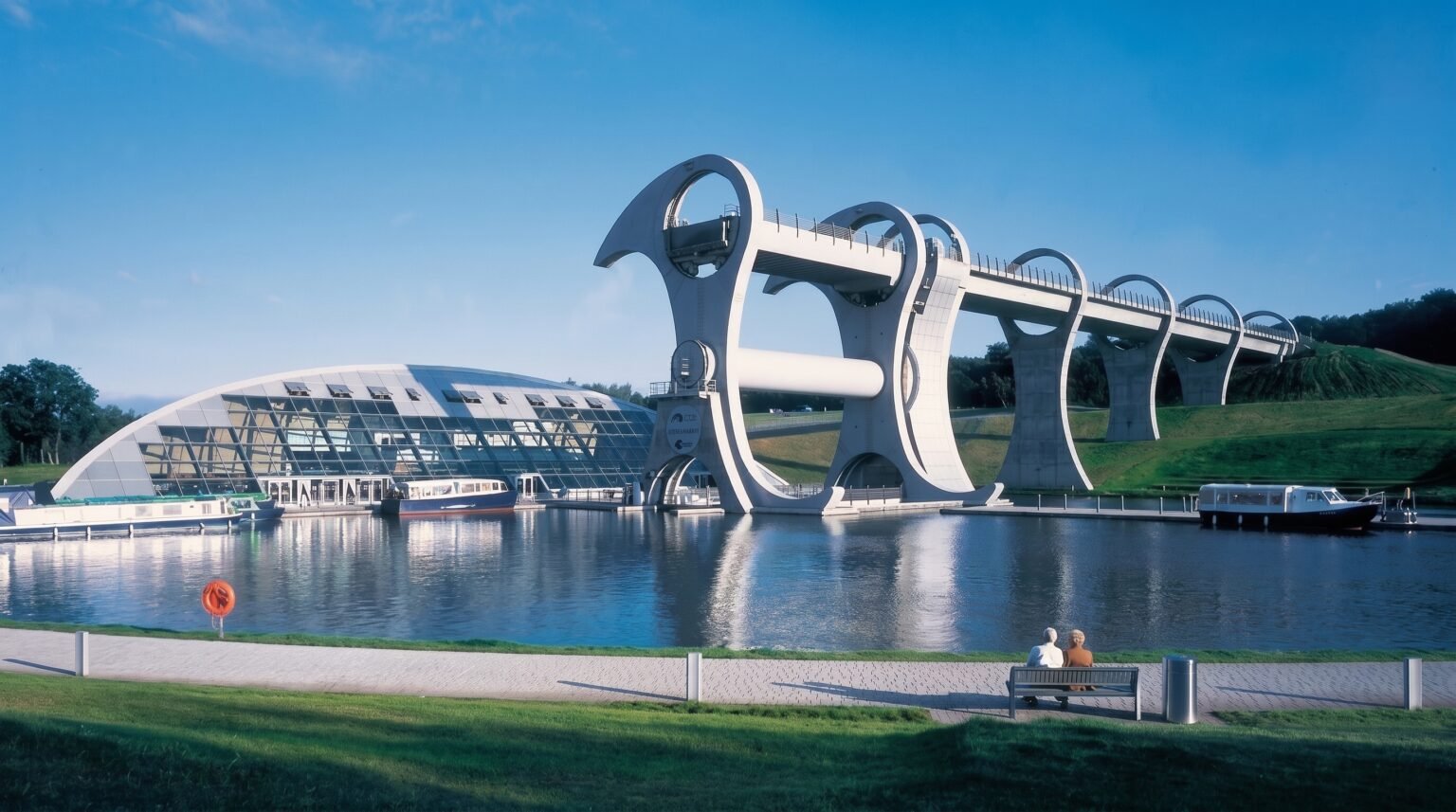
Now walk closer. The wheel doesn’t just lift boats – it looms. 35 metres tall, 35 metres across, its silhouette curves like something half-machine, half-sculpture. Locals will tell you it echoes a Celtic double-headed axe, and once they say it, you can’t unsee it.
Two arms stretch 15 metres beyond a central axle that’s itself three and a half metres thick. Mounted 25 metres apart, those arms cradle two enormous water-filled caissons, each one holding roughly 80,000 gallons. That’s 360,000 litres of water, suspended in the air, turning in a slow, deliberate arc.
The Archimedes Trick
Here’s the detail that breaks people’s brains every single time. A boat can sail into one of those caissons, and the wheel won’t need a single extra watt to lift it. Archimedes solved this problem over two thousand years ago: a floating object displaces its own weight in water. Add a boat, remove an equal volume of water, and the caisson weighs exactly the same as it did empty.
Balance isn’t a bonus feature here. It’s the entire trick.
By the Numbers: Power, Steel, and Bolts
So the wheel turns on that balance, rotating a full 180 degrees in five and a half minutes, carrying up to 600 tonnes of boats and water without breaking a sweat. It runs on about 22.5 kilowatts. One estimate puts the real consumption at roughly 1.5 kWh across four minutes – about the same energy it takes to boil eight kettles. A machine that lifts hundreds of tonnes, powered by less electricity than your kitchen uses on a Sunday morning.
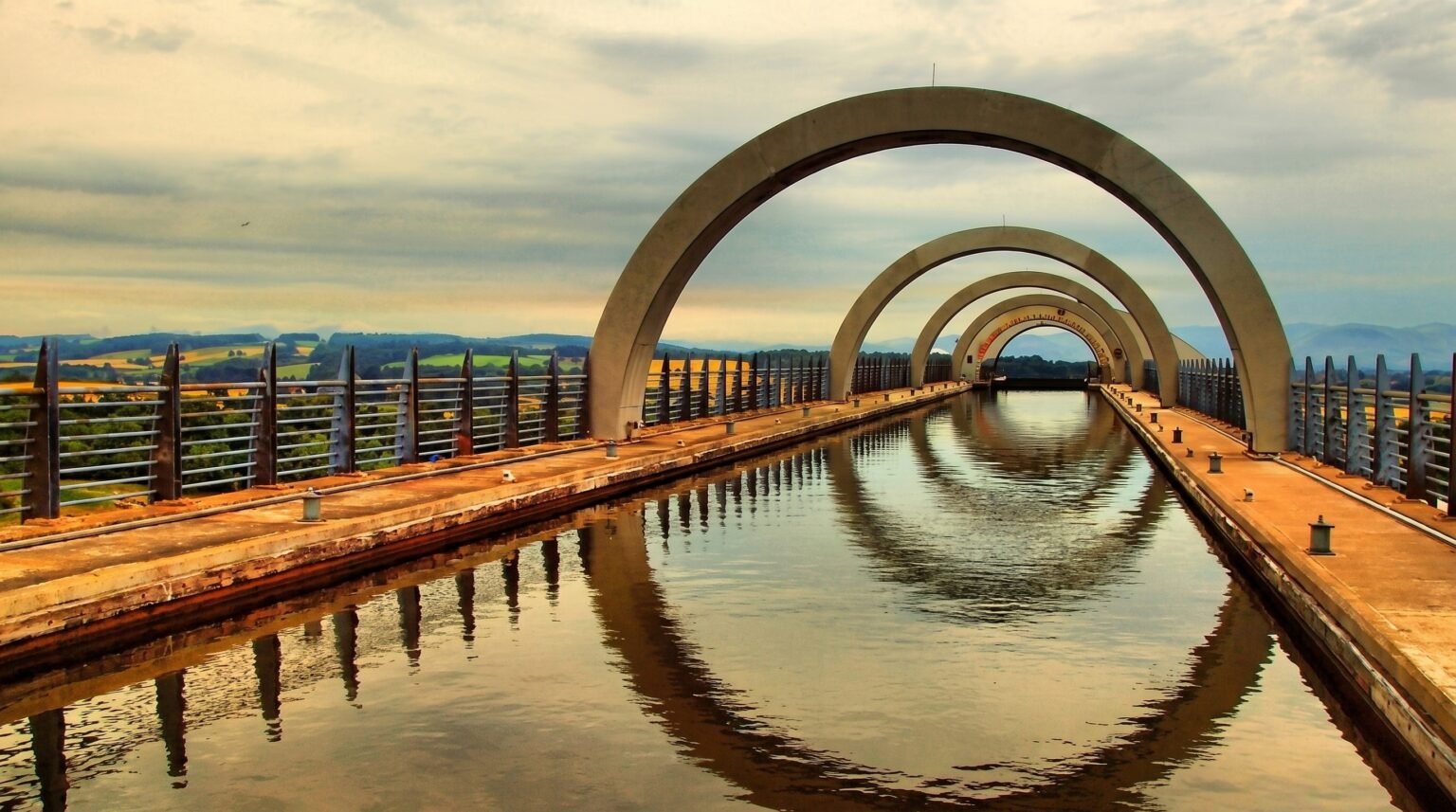
Look closer at the structure and the numbers keep climbing. Around 1,200 tonnes of steel went into this thing. More than 15,000 bolts, matched precisely to 45,000 bolt holes, each one tightened by hand – not by robot, not by guesswork, by human hands checking human work, piece by piece, until it held.
It was fabricated far from here, at Butterley Engineering in Derbyshire, then broken down and driven north in 35 separate lorry loads before being reassembled on site like the world’s heaviest jigsaw puzzle. Beneath it all, 22-metre concrete piles reach down and lock into solid bedrock, anchoring the whole rotating structure so it can keep turning for an intended 120 years.
A System Built Around the Falkirk Wheel
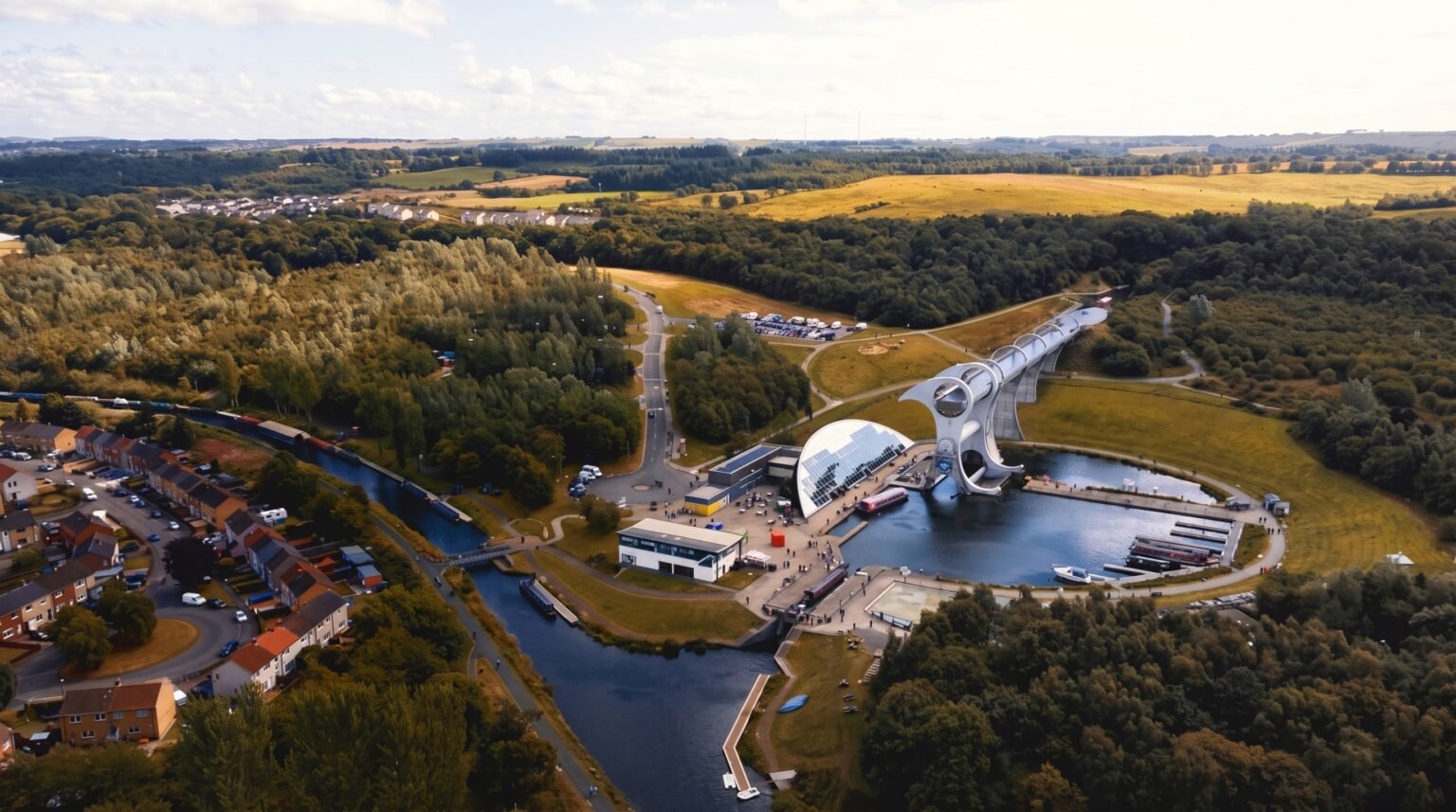
And the wheel is only the headline act. Beyond it stretches a 300-metre aqueduct, a 145-metre tunnel burrowing beneath both the Edinburgh-Glasgow railway line and the ancient Antonine Wall, plus two new locks handling the final stretch on the Union Canal side. Engineers even extended the Union Canal itself by about a kilometre westward, just to make the whole system click into place.
Around 1,000 people built this. Stand at the base and you can almost feel every one of them in the steel.
Buried Under Tar and Time: What Actually Died Here
Not a Ruin, But an Erasure
Here’s the twist you don’t expect. Nothing at Falkirk Wheel ever collapsed. No rust-eaten girders, no roof caving in on itself, no site left to rot behind a chain-link fence. What died here was something older and quieter: a working connection between two canals, killed by slow neglect long before this machine ever existed.
Rewind to the early 20th century. Canal freight was losing its war against railways and roads, boat by boat, cargo run by cargo run. The eleven locks linking the Forth and Clyde to the Union Canal grew idle, then useless, then simply in the way. In 1933, workers tore them out entirely.
Picture what came after. The old route got filled in, buried under decades of soil and construction. Houses went up. Roads cut across ground that once carried barges. A whole transport corridor vanished from the map, erased so thoroughly that most locals forgot it had ever existed at all.
Poison Beneath the Basin
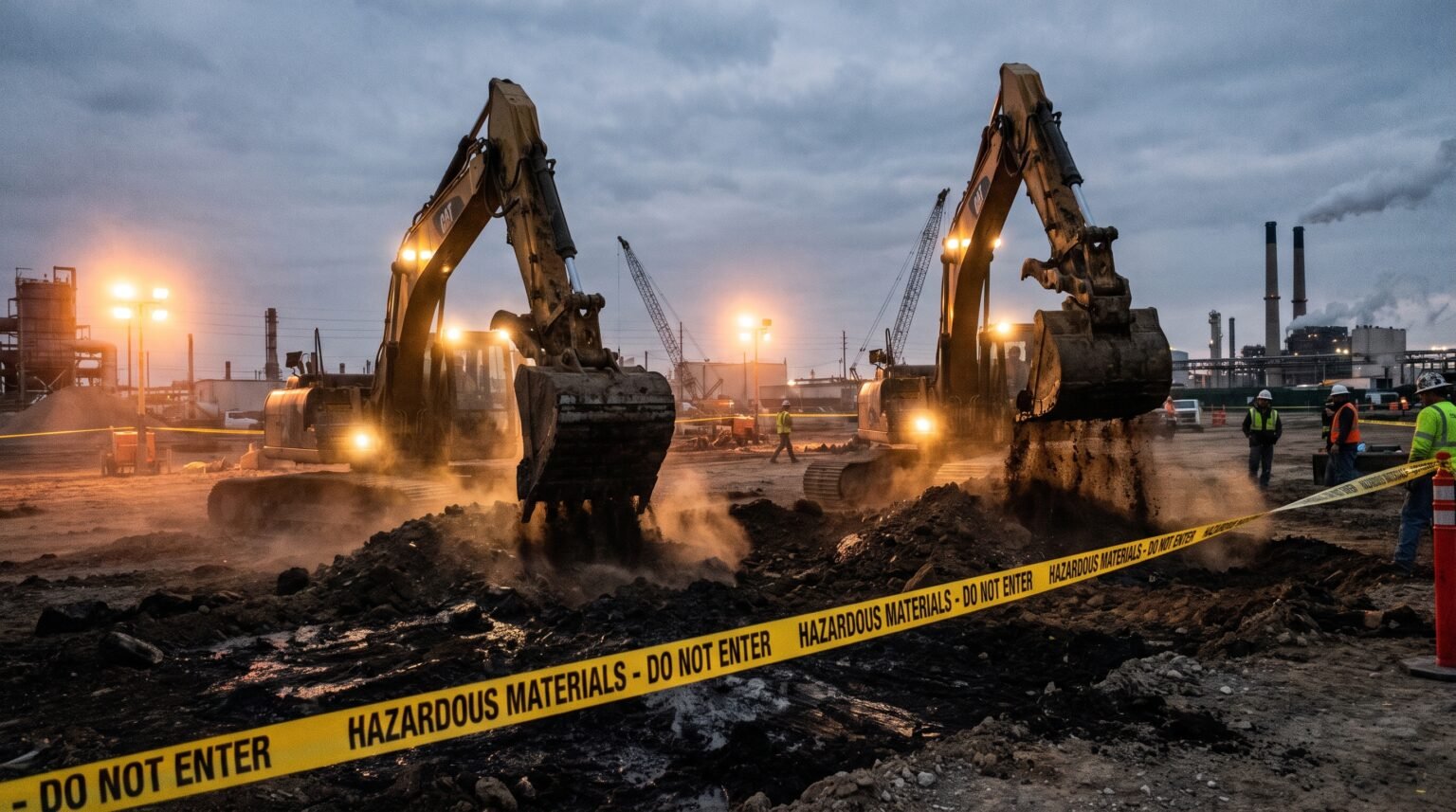
Beneath that erased corridor sat something worse than memory loss. Decades of industrial use had left the ground poisoned, laced with tar and mercury from an old mine and tar works that once operated on the site.
So when engineers finally came to rebuild the link in the 1990s, they weren’t just solving a height problem. They were digging into contaminated earth, stripping out toxic legacy waste before a single foundation pile could go in. The wheel you see today stands on ground that had to be cleaned before it could hold anything at all.
That’s the real collapse story here. Not a structure falling down, but a whole piece of infrastructure quietly erased, then resurrected on land that fought back the whole way.
Visiting the Falkirk Wheel: A Ground-Level Guide
Getting to Falkirk Wheel: No Bolt Cutters Required
Forget the crumbling floors and rusted padlocks you’d expect on this blog. There’s no fence to slip past here, no torch beam cutting through darkness. The Falkirk Wheel runs in daylight, in public, with a car park and a gift shop, and that’s exactly what makes it worth the trip.
Getting there is straightforward, almost disappointingly so. Come off the M876 at Junction 1, follow Bonnyhill Road to the visitor car park, and the wheel announces itself long before you park.
By car from Edinburgh or Glasgow it’s roughly a 30–40 minute drive; local buses and tour operators also serve the site. You don’t need boots built for rubble here. You need comfortable trainers and maybe a jacket, because canal-side wind cuts sharper than you’d think.
Tickets, Timing, and What’s On Site
Opening times are seasonal and the site is typically open daily with extended hours in summer. Ticket options usually include a wheel‑only ride (a single rotation on a canal boat), combined boat‑trip plus visitor‑centre packages, and family and concession rates – check the official Falkirk Wheel website for current prices and to book.
Facilities on site include a visitor centre, gift shop, café, accessible pathways, and guided boat trips that let you ride inside a caisson. For the best experience, arrive early to avoid crowds and capture photos in softer morning light; midweek visits are generally quieter.
The site pulls serious numbers now – more than 5.5 million visitors since it opened – and by midday the paths around the basin fill with families, cyclists, and boat traffic all angling for the same view.
Watching the Wheel Turn From the Basin
Walk the canal pathway first. Approach slowly, the way you’d approach any machine you don’t fully trust yet. The water sits unnervingly still in the lower basin, waiting. Then somewhere behind you, the hum starts, and the whole mechanism begins its turn.
Watch it from below and the scale becomes almost violent. Six hundred tonnes of boats and water, rotating in near silence, arms sweeping through a slow 180-degree arc that takes five and a half minutes but feels longer, like time itself has slowed to match the steel.
Riding the Caisson Yourself
If you want the full sensation, don’t just watch from the basin. Book passage on one of the canal boats and ride the caisson yourself. Feel the floor tilt imperceptibly as you rise, water and boat locked in perfect balance, thirty-five metres of empty air opening up beneath you.
There’s no urbex gear required here, no need for a headlamp or a crowbar. Just a ticket, a decent camera, and a willingness to stand still long enough to let the machine do something your instincts still insist is impossible.
That’s the quiet legacy of this place. A dead canal link, buried under poisoned ground for sixty years, turned into one of the most photographed pieces of infrastructure in the UK. Not decay reclaimed by nature, but failure reclaimed by ambition – and rebuilt into something that still, every single day, makes strangers stop and stare upward in disbelief.
Visitor Information
| Location | Falkirk, Central Scotland |
| Best Time to Visit | April–October; weekday mornings for fewer crowds |
| Opening Hours | Open daily (hours vary seasonally; check official website) |
| Boat Trips | Available year-round (subject to weather & seasonal schedules); advance booking recommended |
| Entry Fee | Site access is free; boat rides and some attractions require paid tickets |
| Parking | Large on-site paid parking with accessible spaces |
| Nearest Motorway | M876 (Junction 1) |
| Public Transport | Local buses from Falkirk; nearest railway stations: Falkirk High & Falkirk Grahamston |
| Walking Trails | Canal towpaths, Union Canal, Forth & Clyde Canal, Antonine Wall & Rough Castle Fort trails |
| Photography Spots | Lower Basin, Visitor Centre Plaza, Aqueduct, Canal Towpath, Upper Basin |
| Accessibility | Wheelchair-accessible visitor centre, pathways, café, toilets & viewing areas |
| Facilities | Visitor Centre, Café, Gift Shop, Picnic Area, Toilets |
| Family / Pet Friendly | Yes / Dogs allowed outdoors (check current policy for indoor areas) |
| Approximate Duration | 2–3 hours (3–4 hours including boat trip & walks) |
| Best Photography Time | Early morning or golden hour (sunrise/sunset) |
| Official Website | Check the official Falkirk Wheel website for current schedules and bookings. |
The Final Verdict on the Falkirk Wheel
Stand back one last time and let the whole story settle. This isn’t a ruin. There’s no collapsed roof to mourn, no rusted machinery left to rot in silence. What you’re looking at is the opposite of decay: a dead canal link, buried under tar and mercury for sixty years, resurrected as one of the most astonishing pieces of engineering Scotland has ever produced.
Eleven locks died quietly in 1933. Nobody mourned them at the time. Nobody could have guessed that decades later, something far stranger and more beautiful would rise from that same poisoned ground, solving the exact problem those locks once solved, only faster, cleaner, and with a kind of mechanical grace no staircase of locks ever had.
That’s the real legacy here. Failure didn’t stay failure. Somebody looked at a forgotten gap in the map and decided the answer wasn’t nostalgia. It was ambition, poured in steel, balanced on two thousand years of Greek mathematics.
So the question worth carrying with you isn’t really about boats or canals at all. It’s this: how many other broken connections are sitting quietly beneath our feet right now, just waiting for someone bold enough to notice them?
Bookmark and subscribe to roastedbum.com to get more updates on astonishing historical deep dives.