Where the World Keeps Its Last Meal
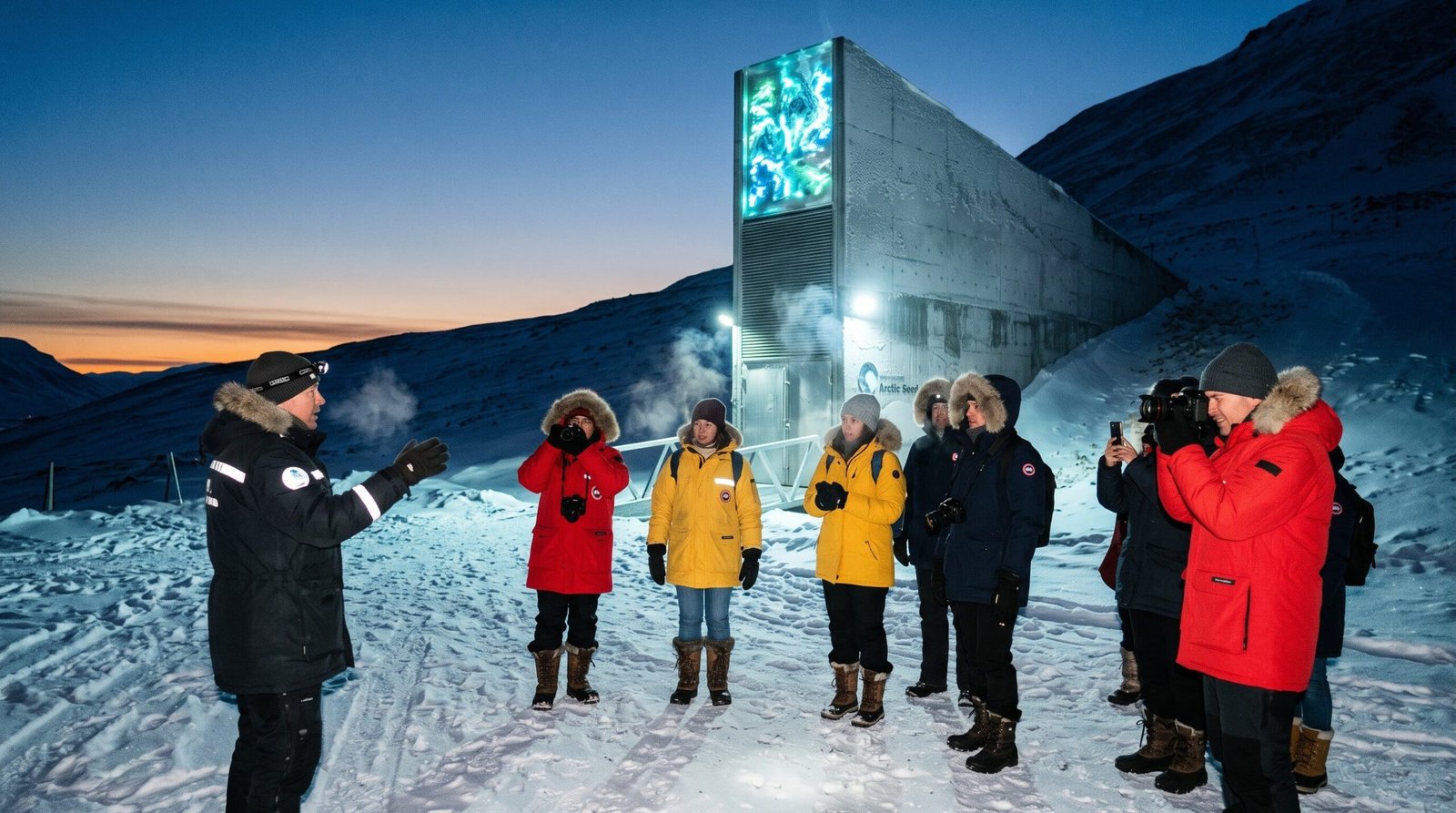
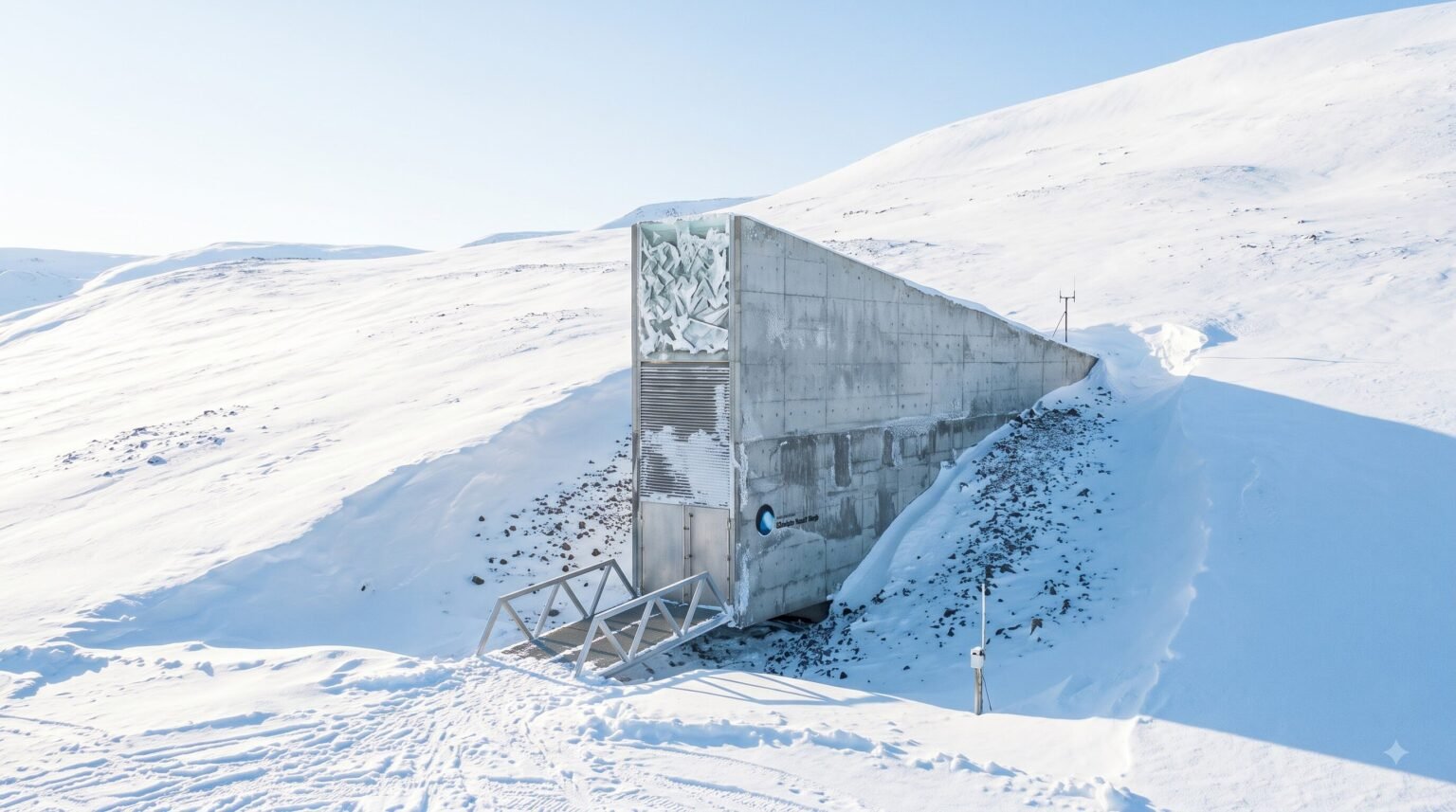
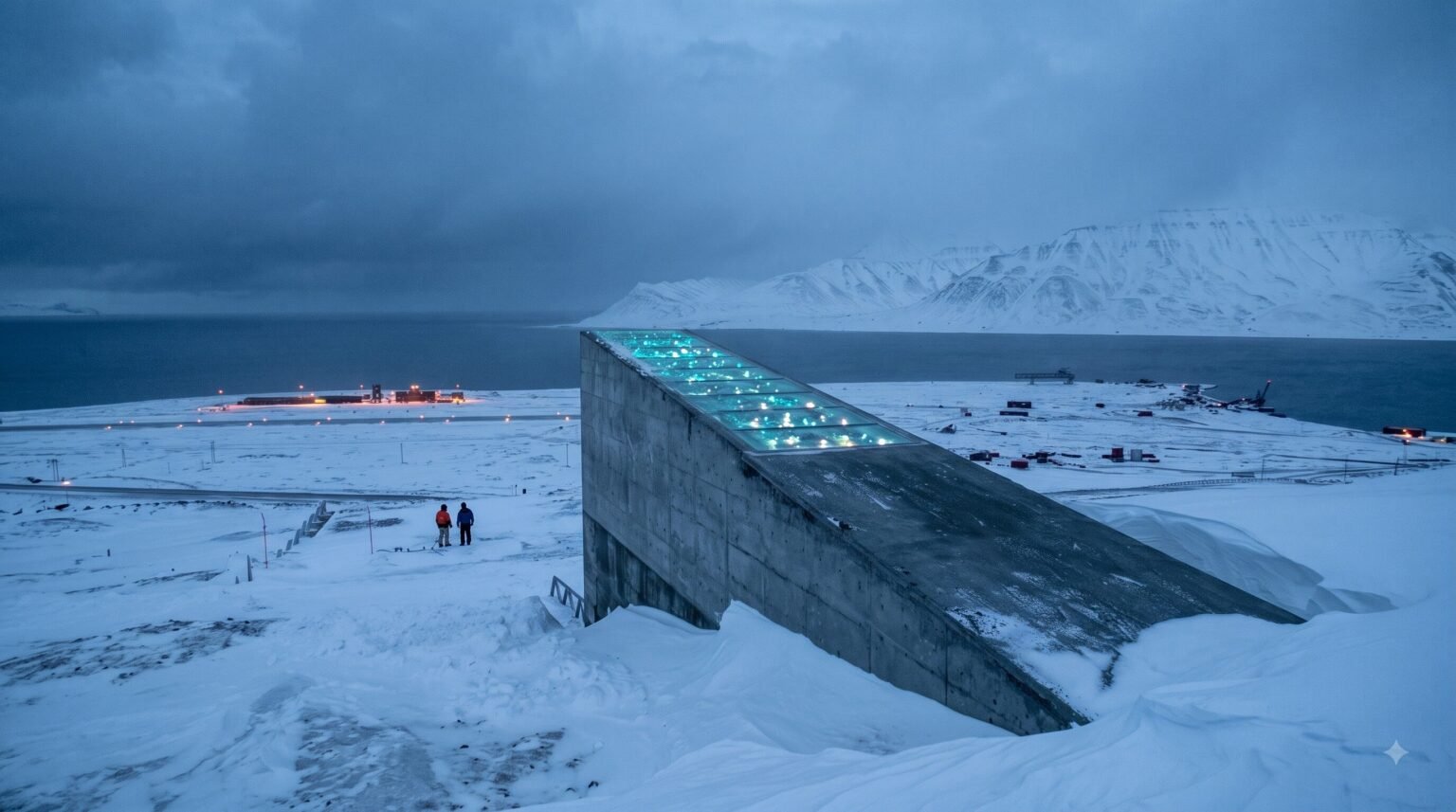
The Svalbard Global Seed Vault doesn’t look like much from a distance. A grey concrete wedge juts out of a frozen mountainside, and the wind comes off the Arctic like a blade.
You stand on the slope at 78 degrees North, about 130 metres above the sea, with nothing between you and the pole but ice and silence. Your breath hangs in front of you. Your boots crunch on snow that squeaks with cold.
Behind that wedge, buried in the rock of the Norwegian island of Spitsbergen, sits a backup copy of the world’s food.
Every wheat field, rice paddock and bean row that has fed humanity has a sibling sleeping here, in the dark, at minus eighteen degrees. It is the largest insurance policy on Earth, and it was built for the day everything else fails.
The Svalbard Global Seed Vault: Numbers Behind the Silence
Let the scale sink in. The vault can hold 4.5 million seed samples, and each sample carries around 500 seeds. Do the sum and you arrive at somewhere between 2.25 and 2.5 billion individual seeds, waiting in the cold.
Seeds kept at -18°C (-0.4°F) can stay viable for a thousand years or more. The vault was designed with a 1,000-year life, so it plans to outlast empires, borders and languages.
You may know it by its other name, the “Doomsday Vault.” The nickname promises an apocalypse, and so far the apocalypse hasn’t come. Nobody has needed it for a true global catastrophe.
It has still been used. Seeds have been withdrawn because of regional conflicts and climate events, which means the safety net has already caught a few falls.
The Black Box Nobody Can Open
Here is the detail that stops people mid-sentence. The vault runs on a “black box” arrangement.
Whoever deposits the seeds owns them. Nobody else can touch them, not the Norwegian government and not the vault’s managers. Only the depositing institution can open its own boxes or take its seeds back.
So the building you’re looking at is a vault in the oldest sense: a locked room full of other people’s treasure. Public entry is strictly prohibited, which makes it one of the least visitable attractions on the planet. You can only look at the door.
What a door it is. A fibre-optic art installation by Norwegian artist Dyveke Sanne washes across the concrete in cold, shimmering light. In the long Arctic dark, it glows like a signal fire for a civilisation that hasn’t yet needed one.
QUICK FACTS: SVALBARD GLOBAL SEED VAULT
| Location | Spitsbergen Island, Svalbard, Norway |
| Established | Opened on 26 February 2008 |
| Nickname | The Doomsday Vault |
| Purpose | To preserve backup copies of the world’s crop seeds |
| Operating Temp. | Approximately −18°C (0°F) |
| Storage Capacity | Designed to hold up to 4.5 million seed samples |
| Natural Protection | Built deep inside a mountain in the Arctic permafrost |
| Management | Cooperation between Norwegian gov., Crop Trust, and NordGen |
| Seed Collection | Stores duplicates of seed samples from gene banks worldwide |
| Main Mission | To safeguard global crop diversity against disasters and threats |
The Idea That Refused to Die
Step back in time to the 1980s, when a small Nordic institution had a big, slightly mad thought. The Nordic Genetic Resource Center, known as NordGen, wondered whether the world’s seed collections needed a safe house at the top of the map.
By 1983, the answer had a place name. NordGen formally chose Svalbard, in the Arctic archipelago, as the site for a gene bank facility. Then the idea went quiet for more than two decades.
Planning resumed in 2005. Two years later, in 2007, the drills and diggers arrived, and the Norwegian government paid for every bit of it.
On 26 February 2008, the doors opened. The world marked the day as a milestone in food security, and the vault already held 320,000 seed samples from more than 100 countries.
Why Svalbard, Of All Places
The choice wasn’t romantic. It was cold, hard logic, and it came in layers.
The bedrock here is geologically stable, and tectonic activity is low. The climate does half the cooling for free, and permafrost wraps the mountain in natural insulation. Norway, the host nation, is politically steady, and the whole archipelago sits far from the world’s major conflict zones.
Stand on that slope again and you can feel the logic. Nothing here shakes, melts or burns easily.
The Crop Trust, formally the Global Crop Diversity Trust, joined the effort and worked with NordGen to plan and coordinate the seed shipments. Boxes began arriving from gene banks around the world, one parcel at a time.
Svalbard Global Seed Vault: A Backup, Not a Replacement
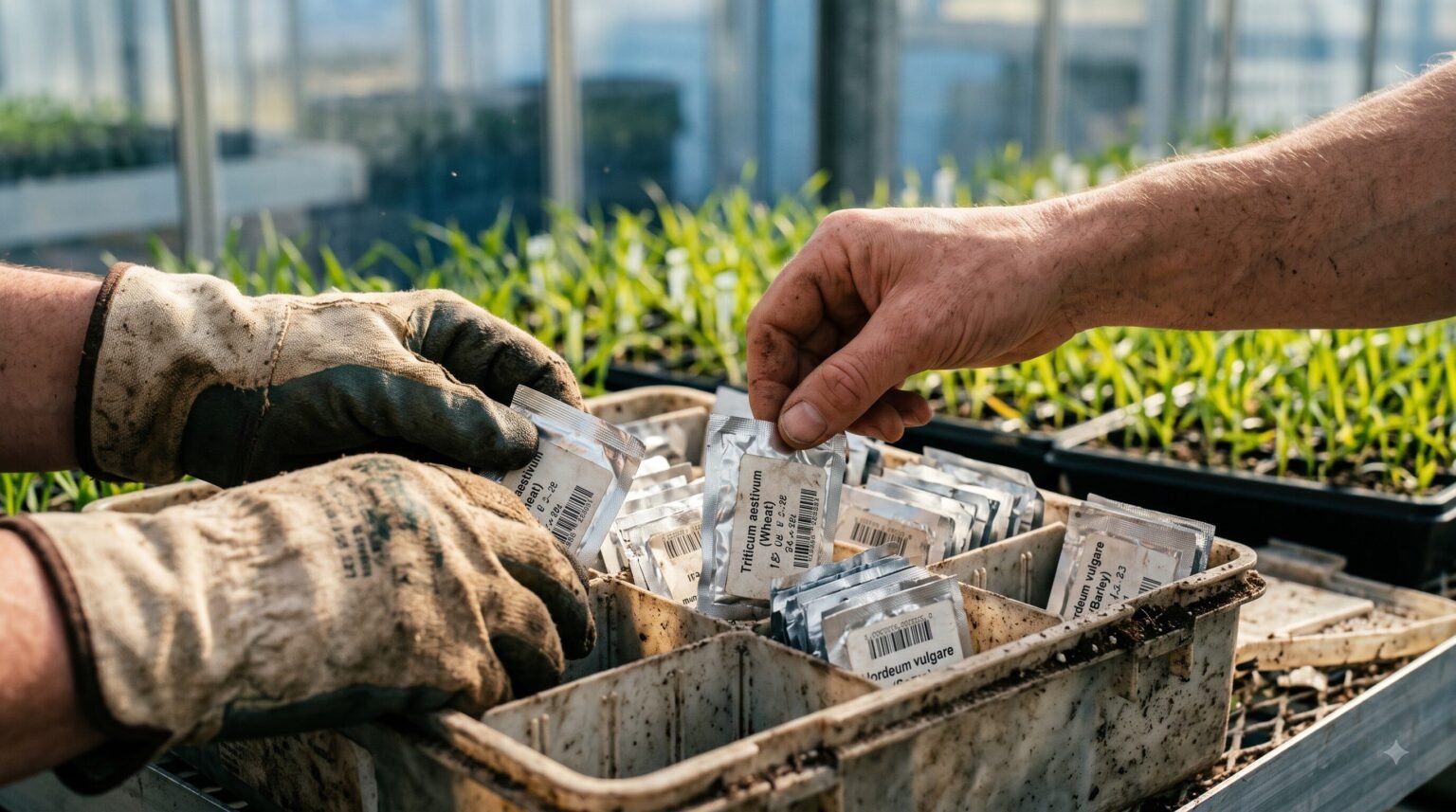
One detail matters here. The vault was never meant to replace the world’s gene banks. It stores duplicates, never the primary collections.
Think of it as the spare key hidden in the garden. War, disaster, climate change or plain institutional failure might destroy a gene bank somewhere, and the spare is waiting at the top of the world.
The original vision called for room for 4.5 million seed accessions, which would make it one of the largest seed stores ever conceived. It was also a rare thing, a feat of international cooperation in an age of climate anxiety and geopolitical tension.
Into the Mountain
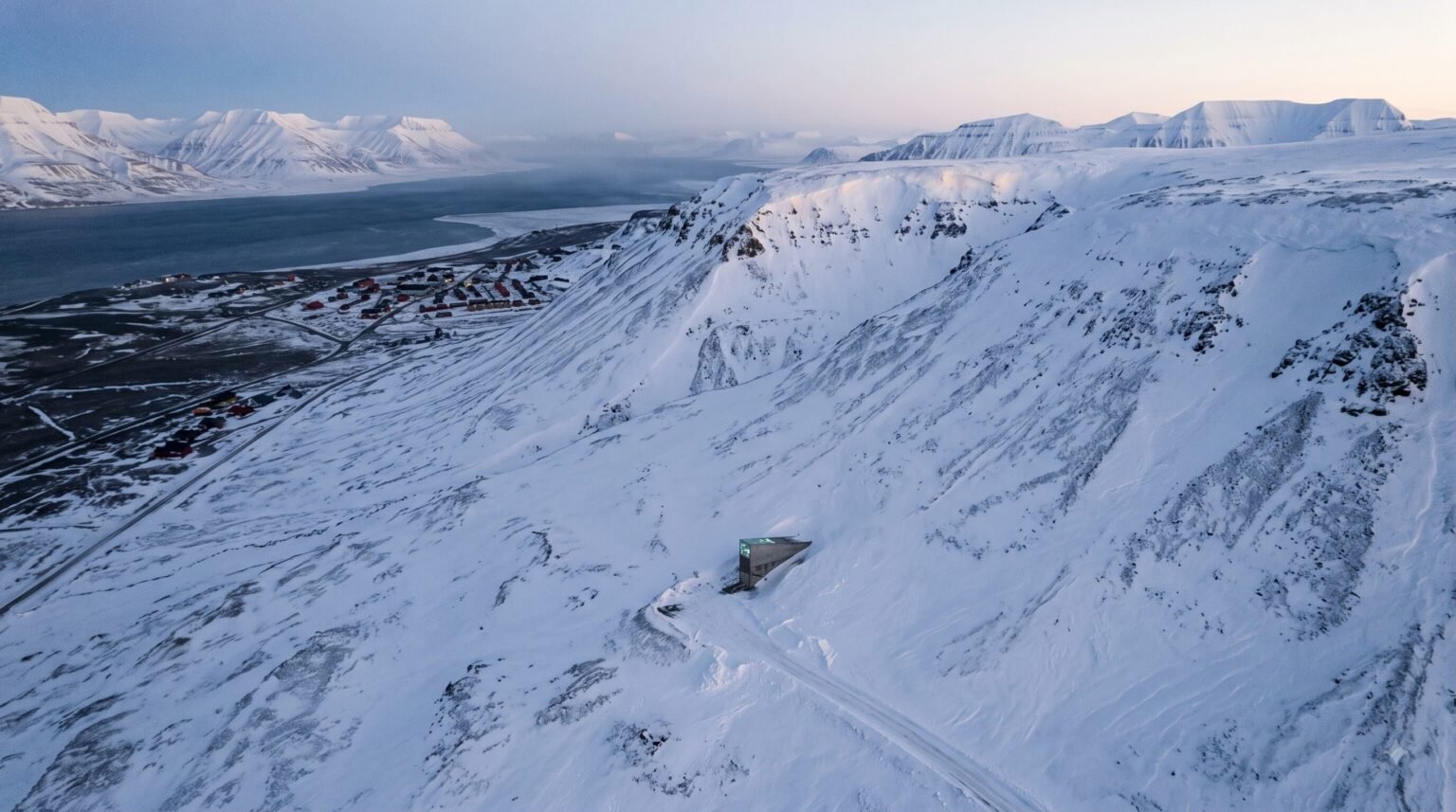
Now walk closer. The portal building looms up, a concrete wedge against a sky that is either black or bruised blue, depending on the season. The mountain behind it is Platåberget, near the town of Longyearbyen.
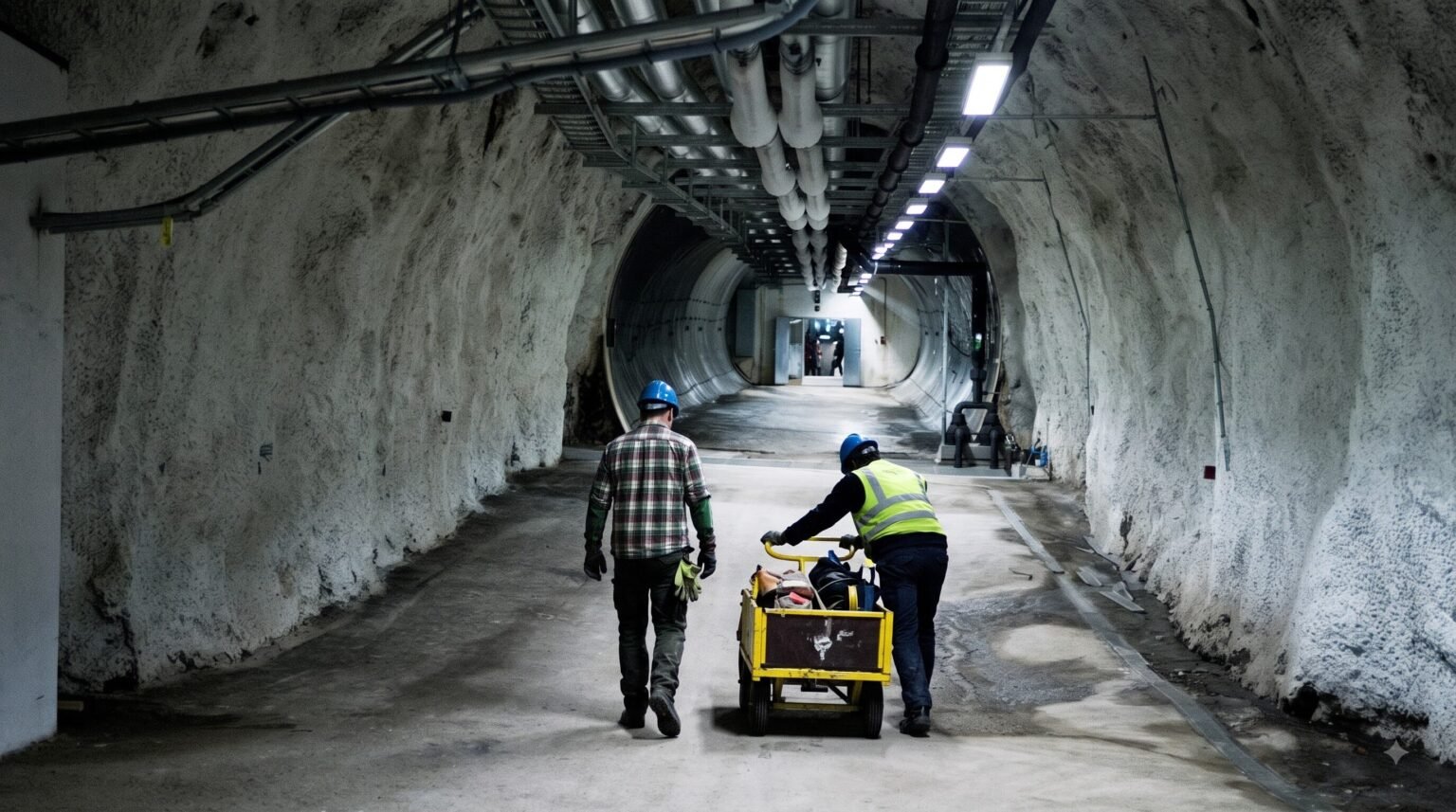
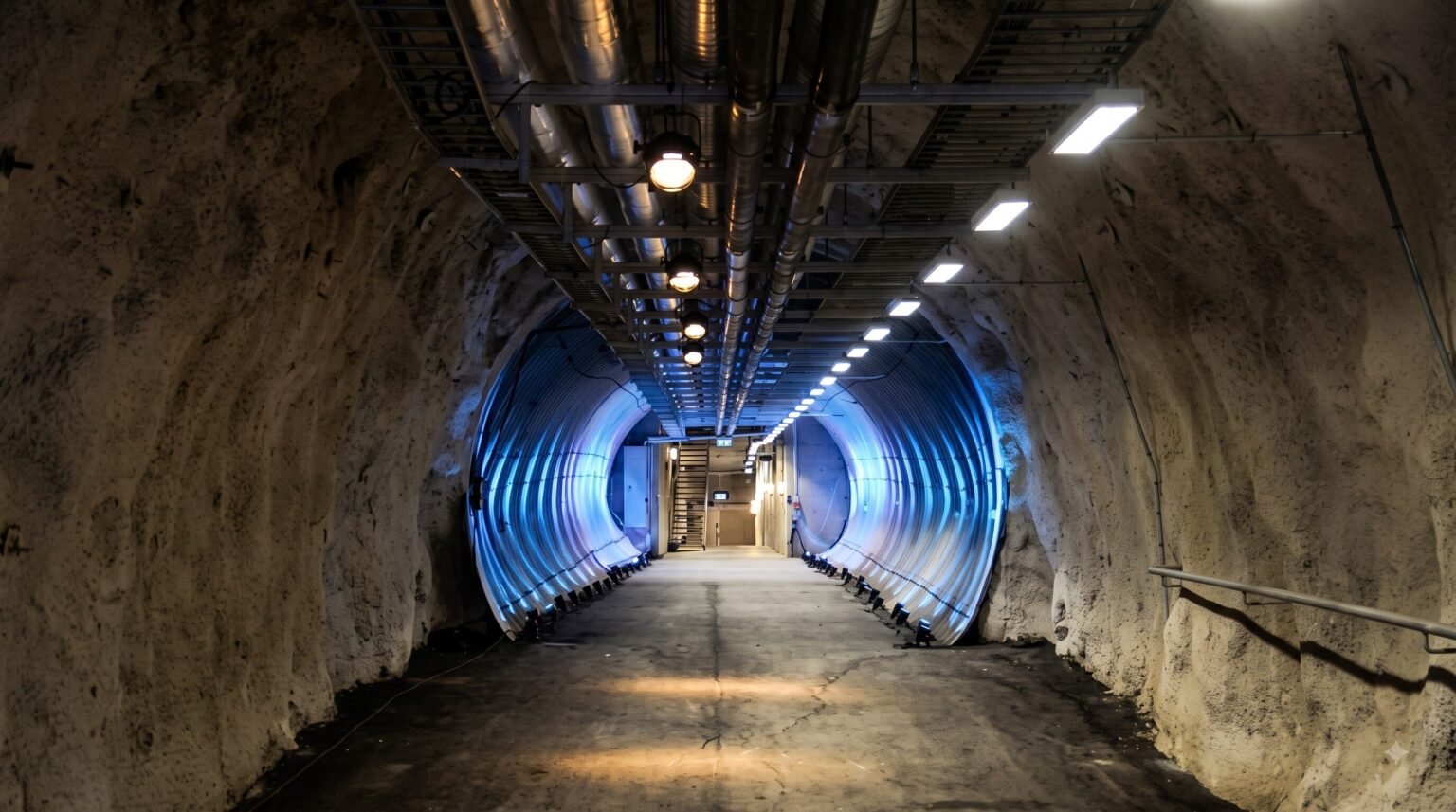
Step inside and the wind drops away. A tunnel swallows you.
One Hundred and Forty-Six Metres of Cold
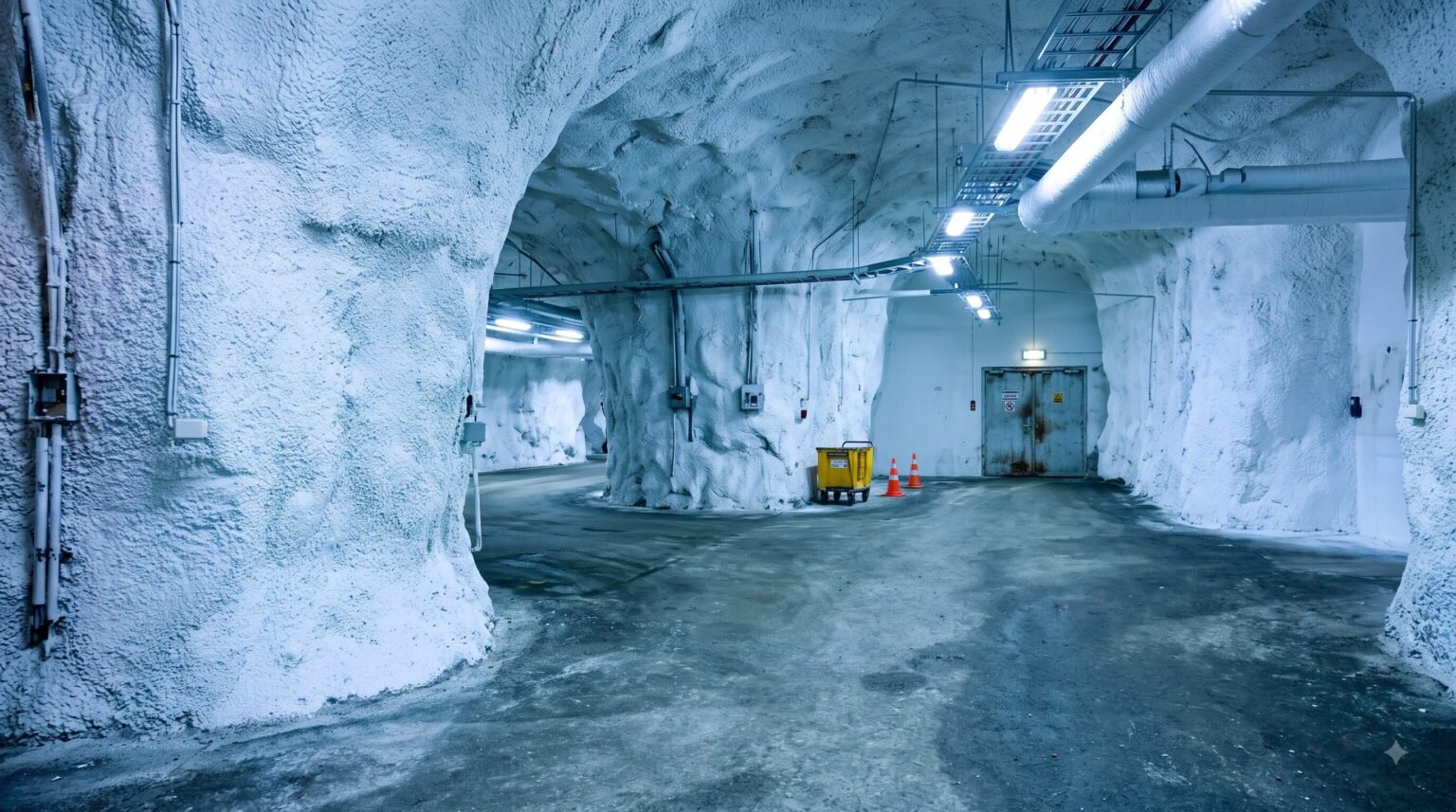
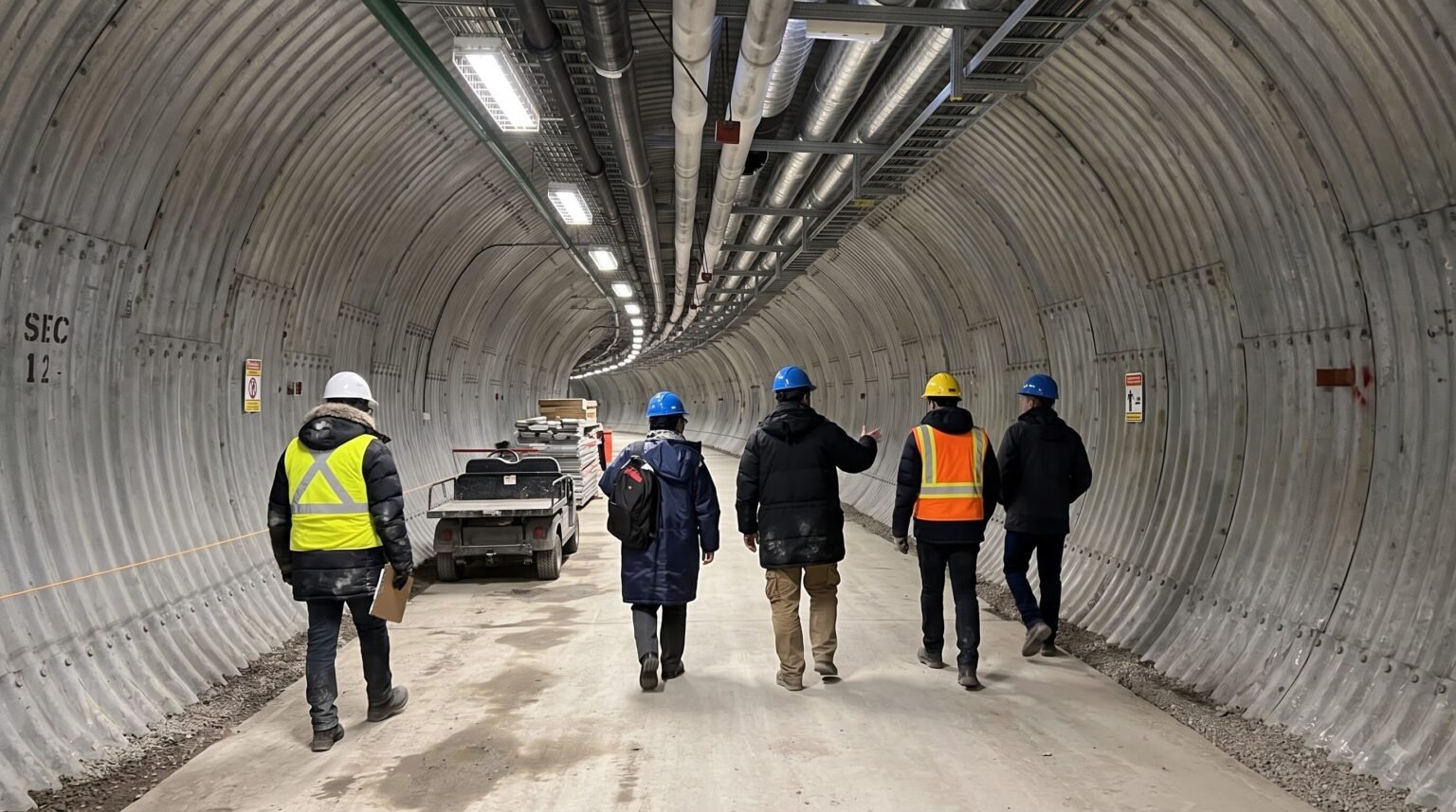
The tunnel runs about 145.9 metres (478.7 feet) from the portal’s front door to the back of the vault. It bores roughly 120 metres, about 390 feet, into the permafrost of the mountainside. The seed storage itself lies more than 100 metres inside the mountain.
Above your head are 40 to 60 metres of solid rock. That rock insulates the seeds and shields them from radiation. You walk beneath it, and the cold presses in from every side.
Three Halls, One Frozen Promise
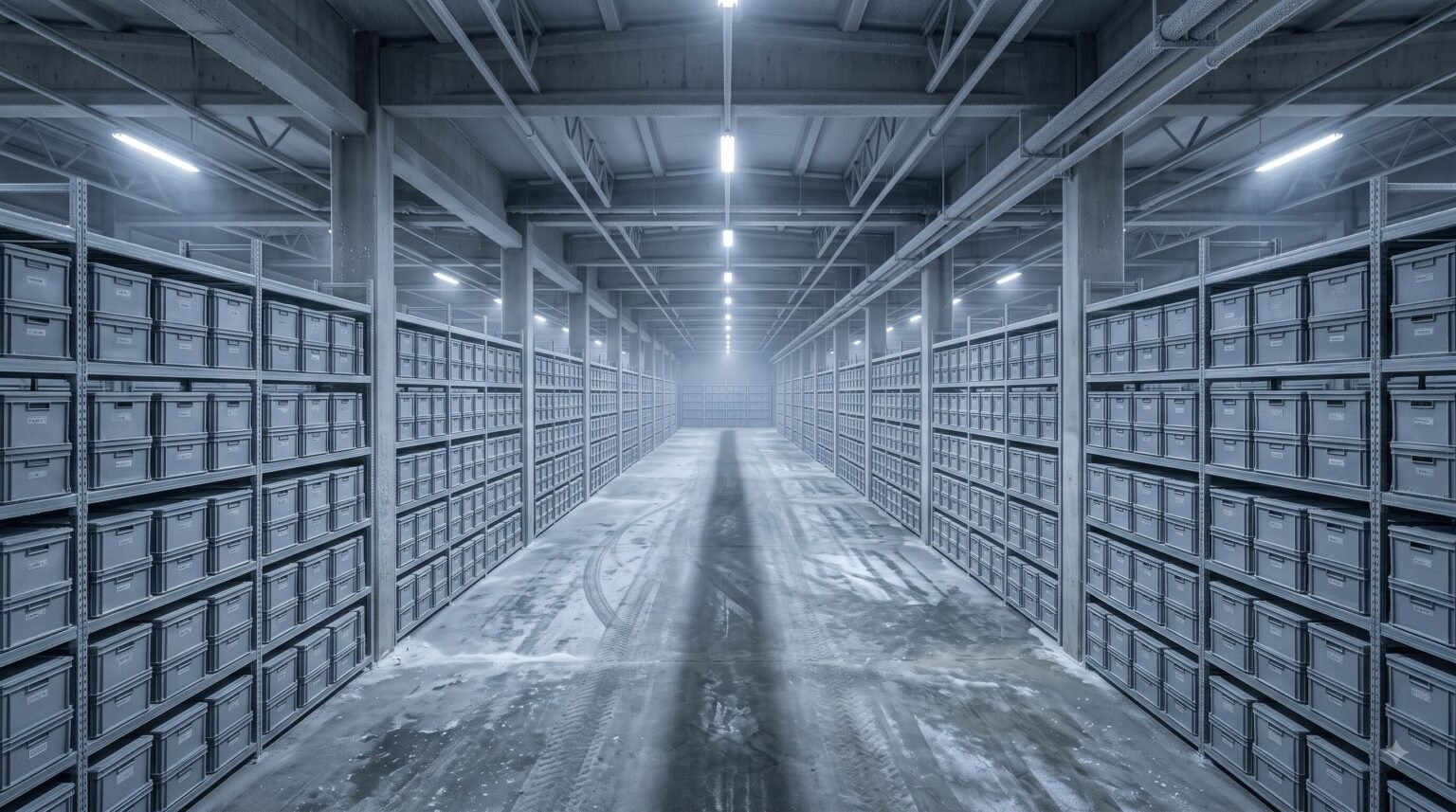
At the end of the tunnel, the vault opens into three separate concrete chambers. Each one has a base of about 9.5 by 27 metres. Each is roughly 9.5 to 10 metres wide and 6 metres high.
Together they cover about 1,000 square metres. Every hall can hold up to 1.5 million seed samples, so the three add up to that 4.5 million total.
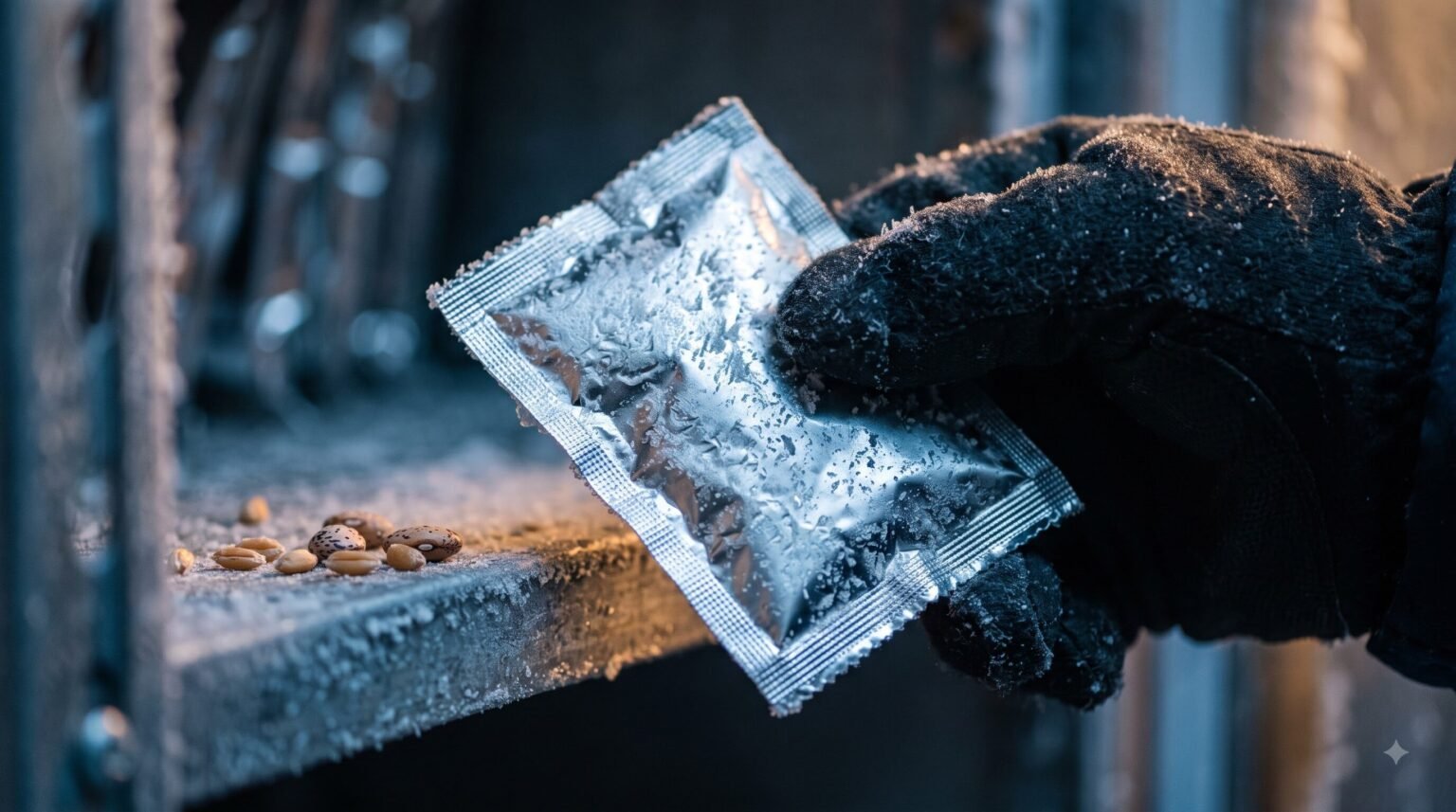
The seeds themselves look humble. They sit in four-ply foil packages, sealed inside boxes and stacked on metal shelving. Row after row of silver and grey, with a faint hum of machinery, and nothing else moves.
The Cold That Doesn't Quit
The mountain isn’t quite cold enough on its own. The rock in the chambers sits at between -3 and -6°C. A dedicated cooling system pushes the temperature down to the target of -18°C.
If the machines stop, the seeds don’t thaw. The deep permafrost and the thick rock hold the cold in. The design lets the mountain look after the seeds even when the power is out.
Everything here was built for the worst day imaginable. The facility is meant to withstand nuclear events, climate change and sea-level rise, power failures, natural disasters and human conflict. The concrete chambers were poured in place inside the drilled rock, sealed and climate-controlled, a hollow of order inside a frozen wilderness.
Place your hand on the cold wall and listen. Somewhere in the dark, billions of seeds are waiting, and a thousand years is how long they’ve been told to wait.
The Winter the Mountain Wept
Here is the twist in this story. The vault never collapsed, and nobody ever walked away from it. The doors are shut, the lights are on, and the Norwegian government and the Crop Trust still keep the place running.
But the mountain did test it. In 2017, an unusually warm winter pushed the Arctic past its own rules.
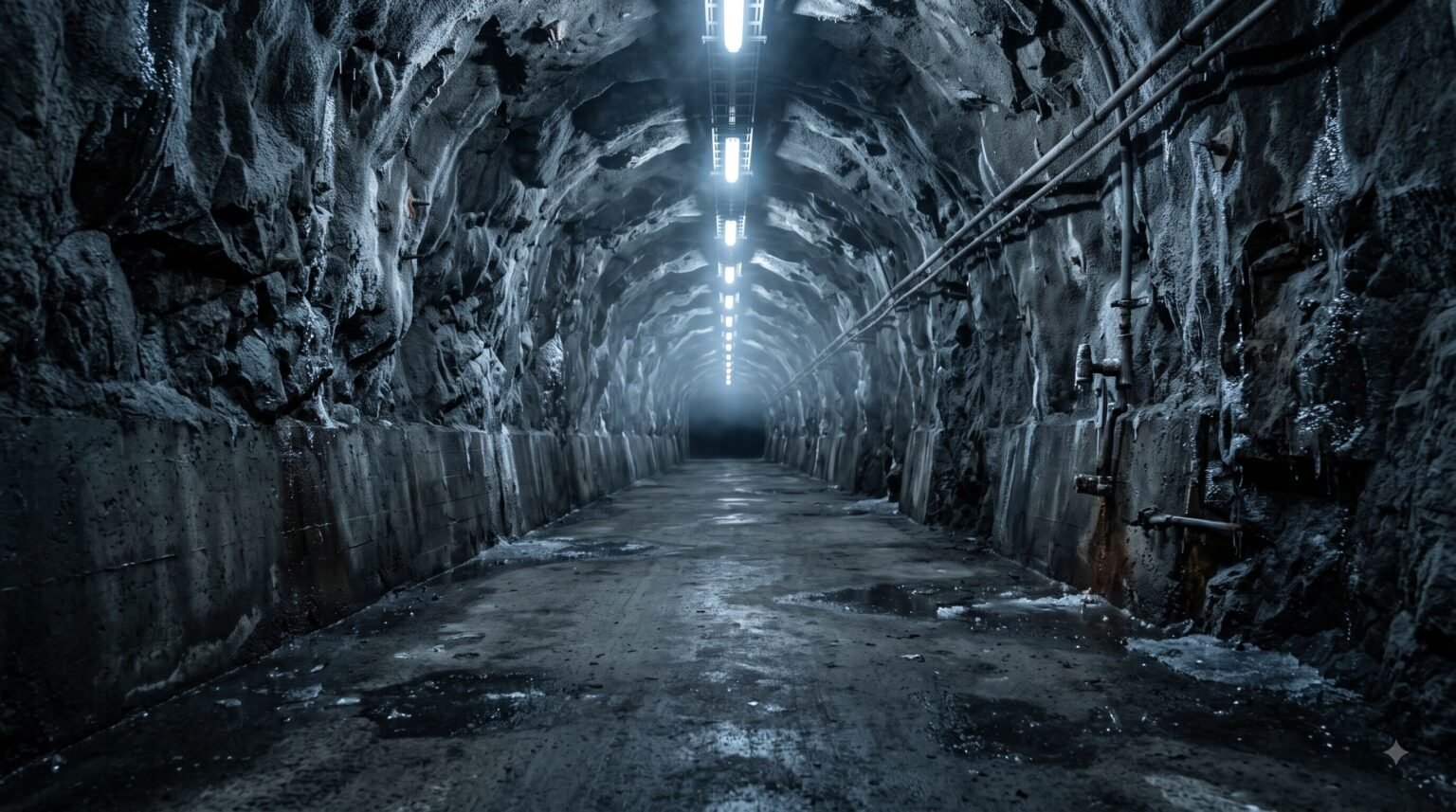
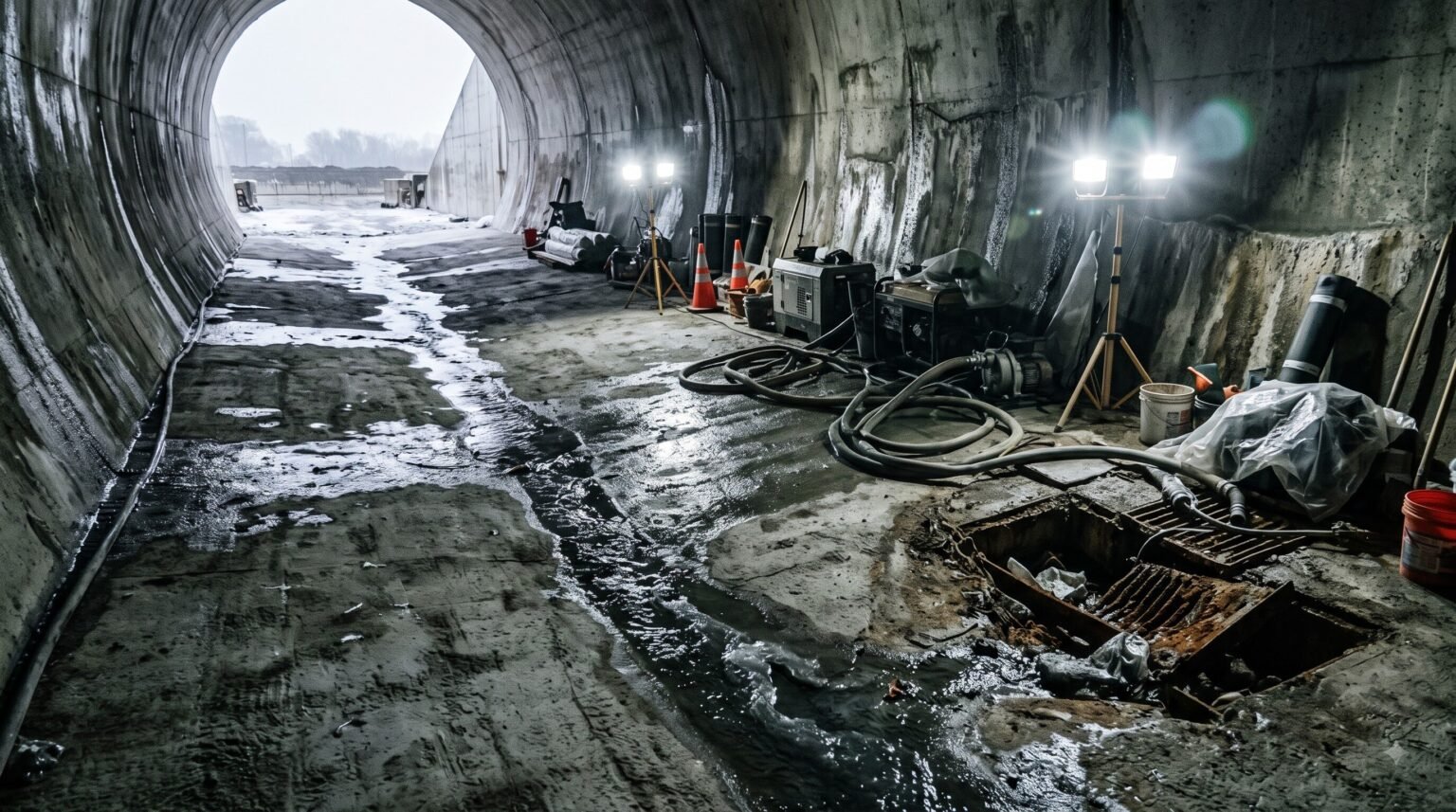
The permafrost around the entrance tunnel began to melt. Water seeped in and ran down the passage you walked through a moment ago.
Picture it. Meltwater pooling in a tunnel built to stay frozen for a thousand years, in a place where ice was supposed to be the one thing you could count on.
The Water That Stopped Short
Still, the scare landed hard. A vault sold as the safest place on Earth had been caught out by a warm winter.
The response was a multi-million-euro upgrade. Engineers waterproofed the tunnel entrance and rebuilt the drainage systems. They installed a new cooling system and reinforced the portal building, the concrete wedge you stood in front of at the start.
Call it a stress test rather than a failure. The incident exposed a weakness, and the fix made the design stronger. Abandoned urbex sites crumble because nobody comes back. This one got a new spine.
Svalbard Global Seed Vault: A Long Shadow Over the Ice
The real threat doesn’t arrive in one dramatic night. It creeps. Rising Arctic temperatures put the permafrost at long-term risk, and that frozen ground is the insulation the whole idea leans on.
So the vault needs constant monitoring, and one day it may need more upgrades. The mountain that protects the seeds is itself changing.
Stand outside in the cold and let that sit for a moment. The thing built to survive climate change has to keep watch on the climate.
The Seeds That Finally Came Out from Svalbard Global Seed Vault
No global catastrophe has ever called the vault into action. A real withdrawal did happen, though, and it came from war.
During the Syrian civil war, between 2015 and 2017, the International Center for Agricultural Research in the Dry Areas, or ICARDA, lost access to its gene bank in Aleppo. Its collection sat out of reach in a city under siege.
The team turned to Svalbard. They withdrew their own seeds from the frozen backup and used them to rebuild their gene bank elsewhere. Regional climate events affecting other gene banks have prompted withdrawals too.
It is a small, quiet drama. Somewhere in a country at war, a lost collection came back to life because a copy slept under the ice.
That works because of the black box model. The vault has no single owner of its contents. It acts as a neutral custodian rather than a central authority, so each depositor keeps what is theirs and takes it back when the worst day arrives.
Norwegian government funding and Crop Trust coordination continue without a break. The doors may be closed to you, but the engine room hums on.
Visiting the Svalbard Global Seed Vault: The World's Most Locked Door
Let’s be honest about what you’re getting. You cannot go inside. Not you, not a journalist, not a film crew.
No one enters the vault apart from authorised personnel, and enhanced security keeps it that way. There is no ticket and no clever workaround.
What you can have is the outside, and the outside is worth the cold. The only public way in is an organised guided tour from Longyearbyen that stops at the vault’s entrance. Tours run throughout 2026.
You can photograph the concrete wedge and the glowing art facade. A guide will explain how the vault works as you stand in front of it. You can look out over the Arctic landscape and the slope of Platåberget.
What you can’t do is walk into the tunnel, reach the seed chambers or get near the sealed doors. You can look at the doors, though. That has to be enough.
From the Airport to the Svalbard Global Seed Vault Door
Start with the flight. You fly to Longyearbyen Airport (LYR), and you reach it by way of Oslo, Norway. The last leg crosses a lot of empty, glittering sea.
Once you land, base yourself in Longyearbyen, the main settlement on Spitsbergen. It is a small, hardy town, and everything you need starts from here.
Book your tour through Visit Svalbard or an authorised local operator. Then climb into the vehicle and ride out to the site, roughly 10 to 15 minutes from the town centre.
The vault sits at the base of Platåberget, about 130 metres above sea level, with the seed chambers roughly 120 metres inside the mountain. You can’t see any of that from the road. You see a wedge of concrete and a long white slope.
You get your time at the entrance with the guide. You photograph, you listen, you shiver. Then you ride back to Longyearbyen, and that is the whole trip. No interior access, ever.
What the Cold Does to You
The experience is all exterior, and it is entirely sensory. Look first. The art facade glows against snow and darkness, the concrete wedge pushes out of the hillside, and the Arctic landscape rolls away in every direction.
Then listen. Arctic wind scours the slope, and distant sounds drift up from Longyearbyen. When the wind drops, silence takes over, and only the weather breaks it.
Breathe in. The air is cold and clean, with snow in it and a hint of sea salt from far away.
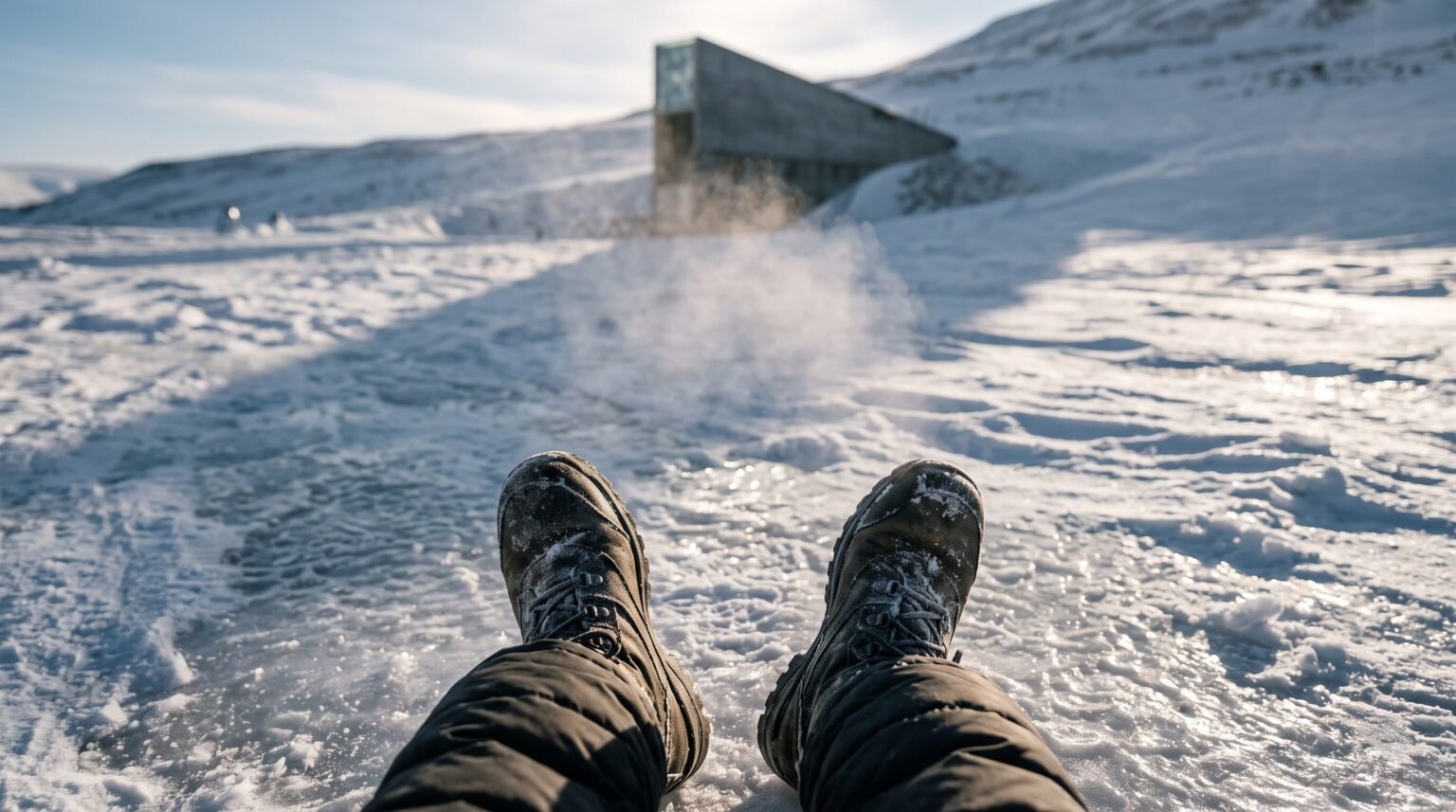
Feel it, too. The cold bites your face, the wind chill cuts through your sleeves, and snow and ice shift under your boots.
Pack Like You Mean It
Dress for the Arctic even in summer. That means heavy, Arctic-rated winter clothing and insulated, waterproof boots. Add gloves, a hat and something to shield your face from the wind chill.
Protect your camera. Extreme cold drains batteries and punishes equipment, so keep spares warm against your body.
Visiting in polar night, between November and January? Bring a headlamp or a torch. The dark here is total, and you will want your own light.
What the Svalbard Global Seed Vault Leaves Behind
Step back from the door and look at what this place has become. It is more than a freezer full of seeds. It stands as a global symbol of climate resilience and food security.
Documentaries, books and news stories have turned it into the icon of doomsday preparedness. It is also a rare case of countries cooperating on something meant to outlast all of them.
That 1,000-year design life and the black box governance make it one of the most unusual preservation projects in human history. As of late 2022, it held over 1.2 million seed samples from gene banks around the world, a big slice of global crop diversity.
Its future isn’t guaranteed. It rests on steady funding, a stable climate and continued cooperation between nations. The design and the location add layers of redundancy against catastrophic loss, and those layers are what you came here to stand beside.
So you turn back toward the vehicle. The wind picks up, the facade glows behind you, and under the mountain the seeds go on waiting in the dark.
The Final Verdict on the Svalbard Global Seed Vault
You came for a locked door, and you found something stranger. The Svalbard Global Seed Vault is not a ruin, and nobody abandoned it. It is a promise carved into a mountain.
Its story has no tragedy in it, only awe. A frozen wedge of concrete guards billions of seeds, and the whole world holds the key to its own boxes.
It flinched once. A warm winter in 2017 let meltwater into the tunnel, and the answer was steel, concrete and a better design. It gave seeds back once, when a war cut off a gene bank in Aleppo.
That is the quiet genius of the place. It is built for a doomsday that has not come, and it earns its keep on the smaller bad days.
Stand outside once and the rest follows. The wind, the glow on the facade and the silence press the idea into you: somebody planned for the worst, and then did the patient work of preparing.
The mountain will keep the cold for a thousand years if the world keeps its side of the bargain. The ice is changing, though, and the vault still needs people willing to watch over it.
So here is the question you carry back down the slope. If we built the safest vault in human history to protect our future meals, what are we doing today to make sure it never has to open?
Bookmark and subscribe to roastedbum.com to get more updates on astonishing historical deep dives.
