You stand on the deck of a rocking ferry. Cold saltwater sprays directly against your face. Ahead lies Hashima: The Ghost Island Japan Wants Forgotten. This decaying concrete labyrinth is the ultimate Ghost Island Japan tries to keep quiet.
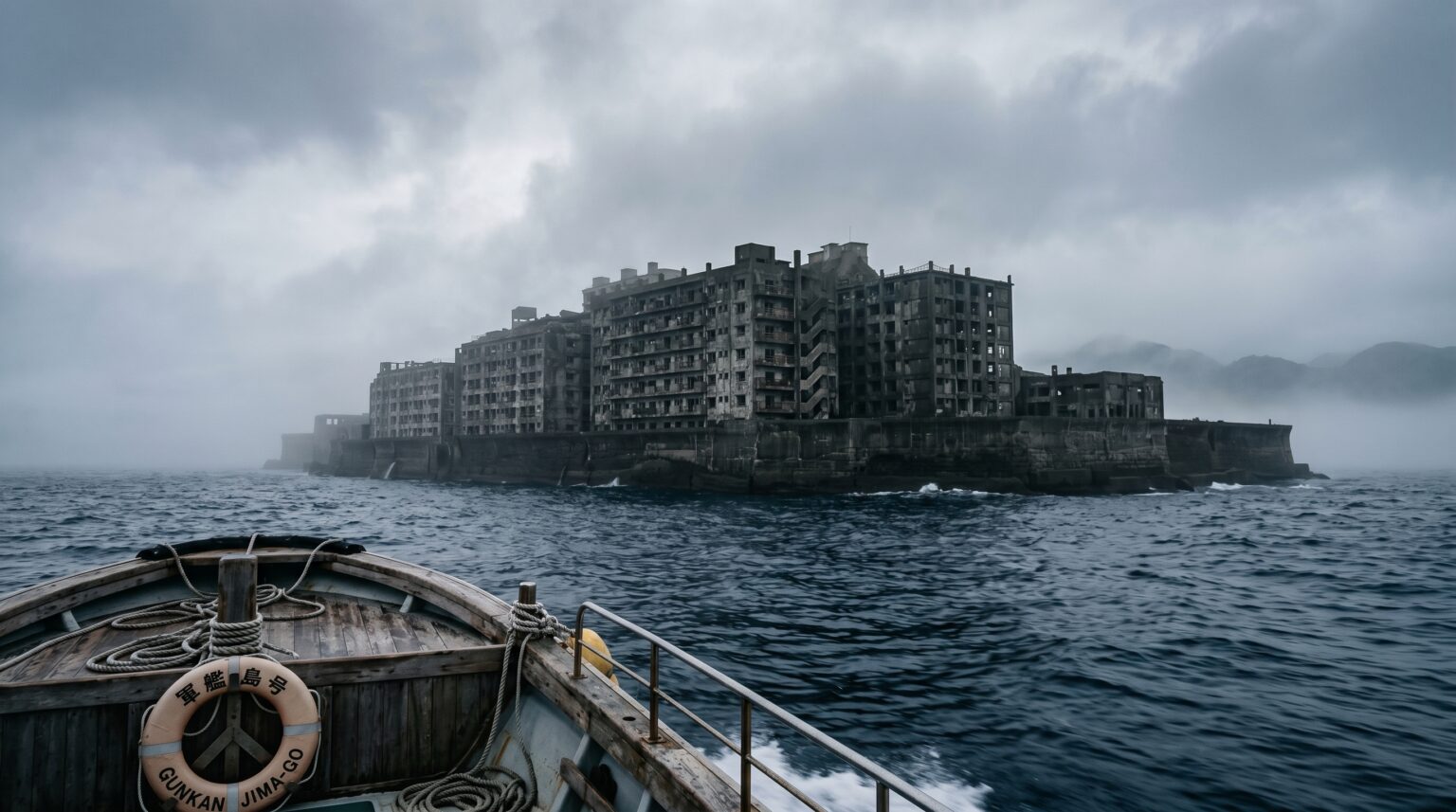
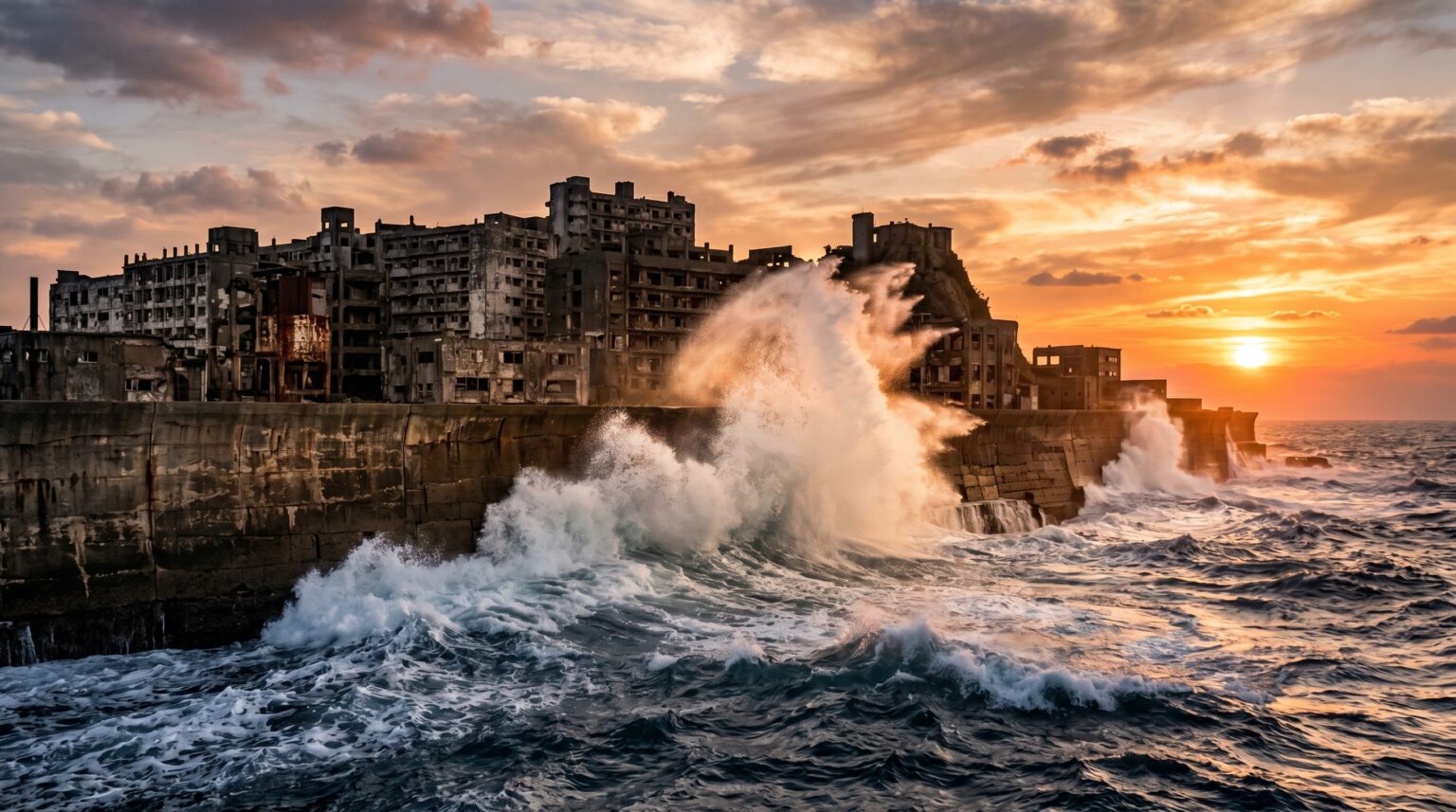
Look closer through the ocean mist. A massive gray structure pierces the dark water. It resembles a massive dreadnought warship from a forgotten era. You are looking at a true modern anomaly.
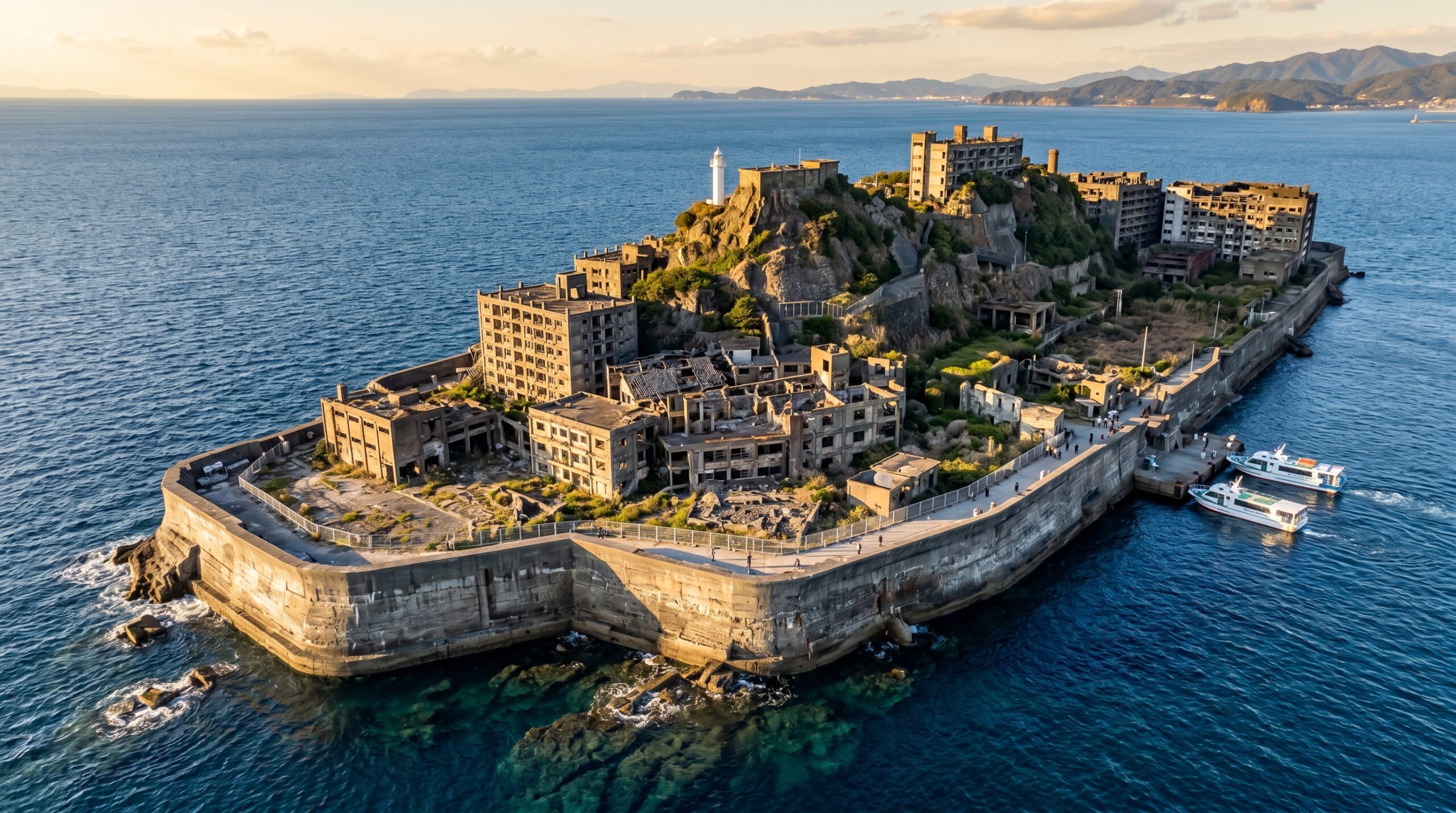
Imagine a bustling, noisy metropolis. Compress that entire city onto a tiny sixteen-acre rock. Remove all the cars. Erase all the streets.
At its absolute peak, over five thousand people lived right here. They crammed into tiny, stacked concrete apartments. This created the highest population density on planet Earth. The Guinness World Records still recognizes this staggering human concentration.
Not a single soul lives here today. The entire population vanished entirely in 1974. They left their coffee cups on the tables. They abandoned their televisions in the living rooms.
Step onto the cracked concrete pier. Listen to the ocean wind howling through broken window panes. You feel the heavy weight of absolute silence. Welcome to the most haunting place on the ocean.
The Grand Vision Behind Ghost Island Japan
Travel back in time to the year 1890. The industrial revolution demands endless fuel. Coal is the absolute lifeblood of modernization.
The Mitsubishi corporation purchases this tiny reef. They envision an underwater coal mining empire. They plan to dig deep beneath the ocean floor.
Building a city on a reef requires sheer force. Workers haul millions of tons of dirt and rock. They expand the tiny footprint outward into the sea.
You can almost hear the rhythmic striking of pickaxes. Feel the heavy, humid air deep inside the mine shafts. Men sweat endlessly in the dark tunnels beneath the waves.
The surface transforms rapidly above the water. A sprawling industrial complex rises from the ocean. Black smoke pours into the sky daily. This remote rock powers an entire nation.
Families arrive in massive droves. They seek steady work and good pay. The island promises a thriving community for loyal workers. A vibrant society forms in the middle of the sea.
Engineering a Concrete Monolith
The sheer scale of this place defies pure logic. Engineers construct a massive seawall around the perimeter. This shield protects the community from raging ocean storms.
Space vanishes almost instantly. Builders look up toward the sky for solutions. They construct Japan’s earliest large-scale concrete high-rise apartment building here.
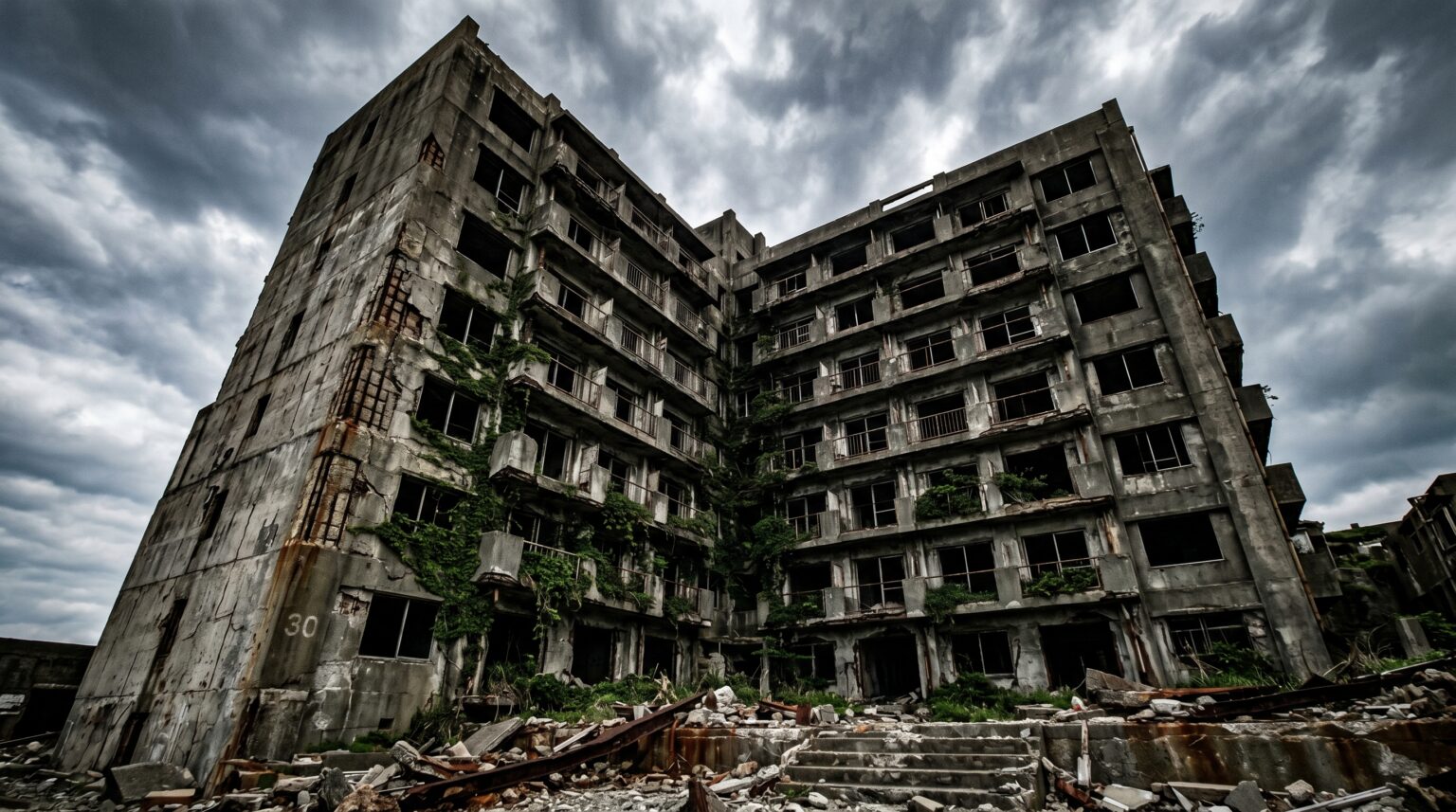
Wander past the decaying foundations today. You see nine-story towers packed tightly together. Narrow walkways connect the different buildings high above the ground.
They build an entire functioning society vertically. The complex features a massive school for the children. A cinema provides weekend entertainment. Rooftop gardens offer tiny patches of green nature.
Feel the rough, crumbling walls. Notice the exposed, rusted steel rebar pointing toward the sky. The harsh marine environment aggressively destroys human engineering.
Typhoons smash violently against the seawalls every single year. Salty ocean spray covers every inch of the structures. Concrete constantly cracks under the immense natural pressure.
Maintenance requires an endless battle against the elements. Water leaks into the apartments constantly. The structural nightmares never truly end for the engineers.
The Dark Reality of the Concrete Empire
Shadows loom heavily over this Ghost Island Japan hides. World War II brings horrific changes to the mining operation. Demand for coal skyrockets to fuel the war effort.
The government conscripts thousands of laborers from overseas. Prisoners of war arrive on these dark shores. They face unimaginable horrors beneath the ocean waves.
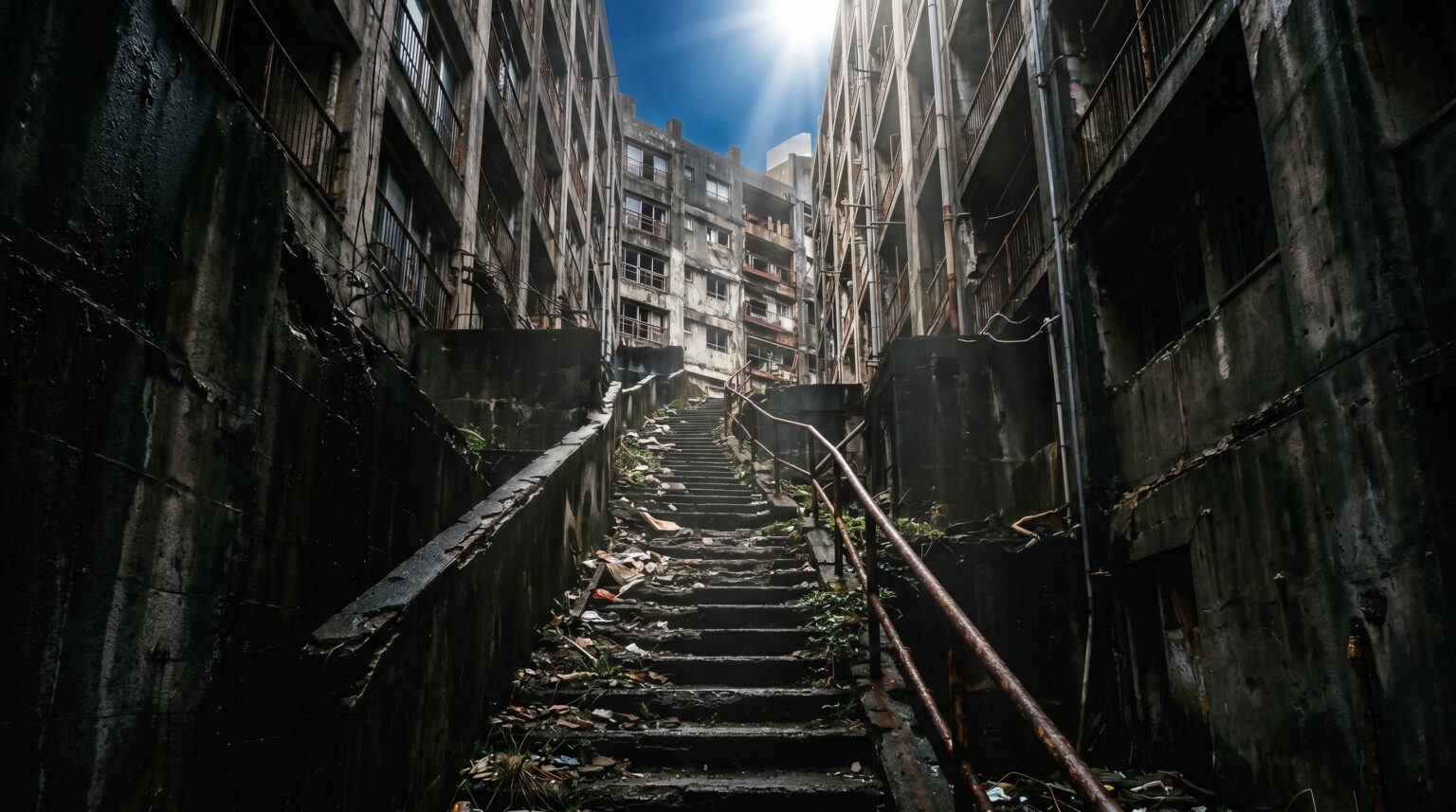
Walk toward the infamous central staircase. Locals call this steep climb the “Stairway to Hell.” Exhausted workers trudge up these steps after grueling shifts.
The conditions down in the mines turn lethal. Temperatures exceed ninety degrees Fahrenheit in the tunnels. The air hangs thick with explosive coal dust.
Tragedy strikes the deep tunnels frequently. Cave-ins crush innocent men in the dark. Malnutrition and exhaustion claim countless other lives.
The island holds dark memories in its concrete bones. The exact death toll remains a controversial topic today. Many voices still demand formal apologies and recognition.
Fast forward to the late 1960s. The global economy experiences a massive shift. Petroleum quickly replaces coal as the primary energy source.
The bustling mines suddenly lose their extreme value. Mitsubishi announces the total closure of the facility in 1974. The bustling community receives shocking news.
Everyone has to leave immediately. The company shuts off the power grids. The fresh water supply stops flowing completely.
Families pack only their most essential belongings. They board ferries and sail away forever. The vibrant, chaotic city becomes an instant graveyard.
The Current Reality of Battleship Ghost Island
Nature aggressively reclaims the entire island today. Wild vines climb up the side of the tallest towers. Weeds push through the thick pavement.
Look at the Ghost island from a distance. The towering seawall and high-rises create a distinct silhouette. It perfectly mimics the Japanese battleship Tosa.
This visual similarity gives the place its famous nickname. People around the world know it as Gunkanjima. The Battleship Island floats silently in the water.
Hollywood eventually discovers this haunting location. Filmmakers use the eerie backdrop for blockbuster movies. It serves as the villain’s lair in a famous spy film.
Wander in your mind through the old hospital wing. Rusty operating tables sit covered in deep dust. X-ray machines rot away in total darkness.
Peer inside the abandoned elementary school. Desks lay overturned in the classrooms. Faded chalk writing still remains on the broken blackboards.
The entire place feels perfectly frozen in time. You sense the ghosts of laughing children in the courtyards. You hear the phantom sirens of the shift changes.
Controversy surrounds the site’s official historical status. The government secured UNESCO World Heritage recognition for the island. Critics argue this ignores the dark history of forced labor.
How to Visit Ghost Island Japan Today
Planning a trip to Ghost Island Japan requires careful preparation. You cannot simply rent a private boat. The ocean hides immense dangers. The government strictly controls all access to the ruins.
Your journey begins at the Nagasaki Port terminal. This bustling hub sits directly inside the beautiful city. Seek out an official tour operator desk here. Only five authorized companies hold permission to land boats.
Book your ticket several weeks in advance. The daily tours sell out incredibly fast. Arrive early on the morning of your departure. You will sign a strict safety waiver document immediately.
Board the medium-sized ferry alongside other eager travelers. The journey takes about fifty minutes to complete. Look out over the stunning Japanese coastline. Prepare your stomach for a very bumpy ride.
The open ocean water gets incredibly rough. Take motion sickness pills before boarding the vessel. Pack a light windbreaker jacket for the intense gales. Bring a basic plastic rain poncho instead of umbrellas.
Wear the correct clothing for this concrete environment. Guides will immediately reject anyone wearing sandals or heels. You absolutely need closed-toe, flat walking shoes. Secure your hat with a tight chin strap.
Prepare for a highly controlled landing experience. The crumbling concrete poses severe physical dangers to everyone. Sudden collapses happen entirely without warning.
Keep these strict regulations in mind before booking:
Tickets cost approximately forty US dollars per person.
Ocean winds cancel ferries frequently and without warning.
Wheelchairs cannot navigate the broken concrete piers.
Children under three years old cannot join the tour.
Step off the rocking boat onto the designated walkway. You cannot wander freely through the decaying apartment buildings. The tour confines you to three safe viewing platforms.
Bring a strong telephoto lens for your camera. Secure your device with a thick neck strap. You will want to capture intricate details from afar. Rusted bicycles and broken televisions sit just out of reach.
Listen closely to the local Japanese guides. They share incredible, heartbreaking stories from former residents. These personal tales bring the dead concrete back to life. Will you add this dark tourism spot to your travel list?
Find more travel tips on the official Nagasaki tourism page. Bookmark and subscribe to roastedbum.com to get more updates on astonishing historical deep dives. We will continue to bring you the best stories from around the globe. Do not miss our next exciting post!
Echoes of the Past
The ocean wind continues to tear the island apart. Every major typhoon claims another chunk of the seawall. The entire city will eventually crumble into the dark sea.
You leave the Ghost island with a heavy heart. The ferry carries you back to the modern world. The gray silhouette shrinks away in the misty distance.
This place leaves a permanent mark on your soul. It showcases the terrifying power of human industry. It equally highlights the relentless force of raw nature.
Does this crumbling concrete labyrinth stand as a towering monument to human ambition, or is it merely a tragic tombstone marking our ultimate hubris?
Bookmark and subscribe to roastedbum.com to get more updates on astonishing historical deep dives.